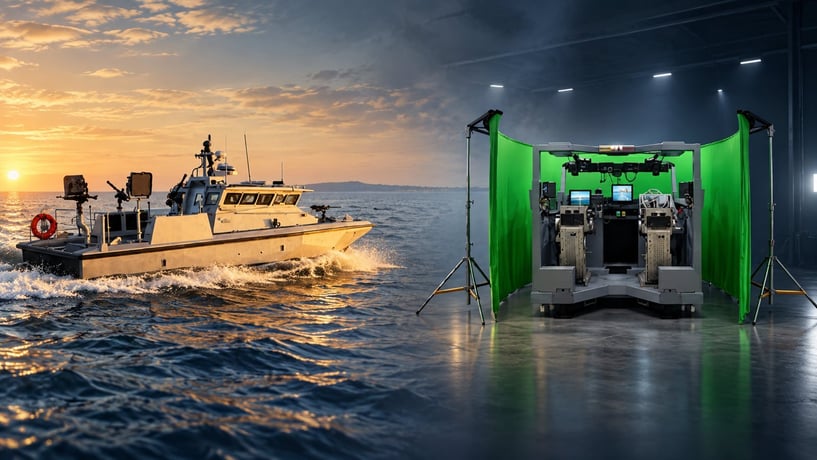
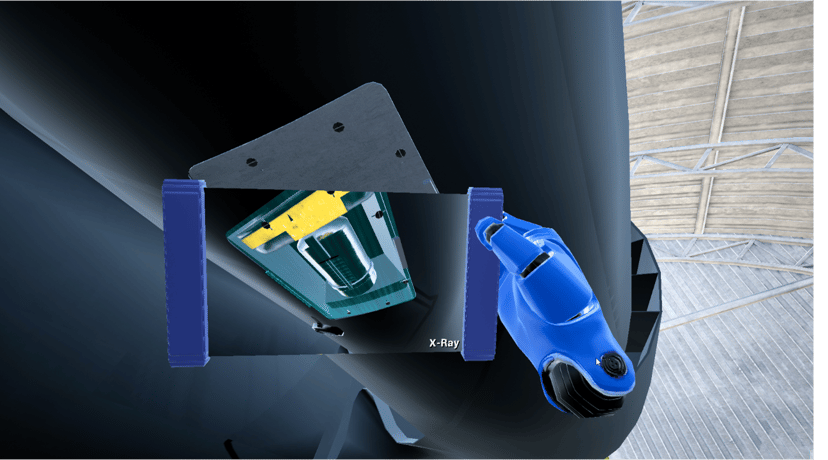
Polhemus’s VIPER, an electromagnetic (EM) tracking system, is now available for use with the Varjo XR-4 Series. The newly released VIPER kit enables seamless integration with XR-4 Series headsets for motion tracking in dynamic training environments. As a leader in electromagnetic motion tracking for over 55 years, Polhemus’s technology has been used in a multitude of military and simulation training technologies.
In this blog, we’ll take a closer look at how the system works, where EM tracking can be useful, and some of the practical considerations when integrating it into a mixed reality simulation setup.
What Is Electromagnetic Tracking and When Do You Need It?
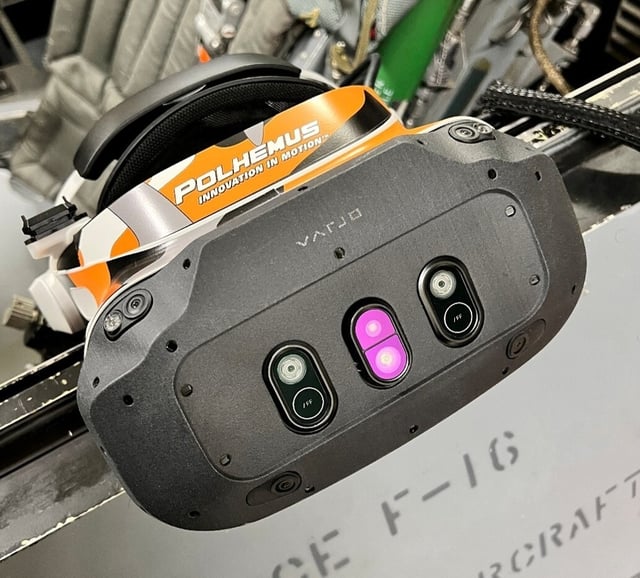
EM tracking generates position and orientation data via a sensor immersed in a calibrated magnetic field. The field is generated by a small, lightweight transmitter called a source. The VIPER XR-4 sensor mount locates the sensor on the headset and enables the tracker to detect head movements. This allows the virtual world to synchronize with the user’s movements, helping to prevent cybersickness.
The built-in inside-out tracking in Varjo XR-4 Series headsets works well when the headset can reference a stable, well-lit environment. Dynamic environments pose unique motion tracking challenges, however, as they involve changes in certain features, such as lighting or movement. On a motion platform, the cockpit moves with the trainee, and optical systems can sometimes struggle to separate platform motion from head motion. This is where an EM tracker, such as VIPER, can bridge the gap. EM tracking measures the sensor against a source mounted in the same moving reference frame, so tracking stays locked to the cockpit no matter what the platform or the lighting does.
What Are the Benefits of Electromagnetic Tracking?
In flight training, a pilot constantly moves their head to scan instruments and to monitor the environment outside the aircraft. With EM tracking, the magnetic field generator does not need a visual line of sight to the sensor, allowing for full, 360-degree freedom of head movement and flexibility in how users integrate the source into their environment. With the capability to embed the source inside objects in the environment, such as a simulated ejection seat, users can avoid tracking hardware being visible to trainees and help to maintain immersion through physical replication in the cockpit.
Additionally, the ease of setting up EM tracking makes it a suitable choice for many applications. No calibration is required, and only one sensor and source are needed to deliver full position and orientation tracking, even while on a motion platform or in a moving vehicle.
Use Cases and Set Up for VIPER Kit
VIPER is designed for both seated and short-range standing applications, such as military and weapons training, or medical training and clinical applications.
For example, a seated application would be pilot head tracking for flight simulation. To practice in-flight procedures and maintain both flying currency and competency, pilots spend considerable time in simulators. VIPER’s motion tracking ensures that the visuals displayed in the virtual and mixed reality environment are as immersive as possible, reducing the risks of negative training.
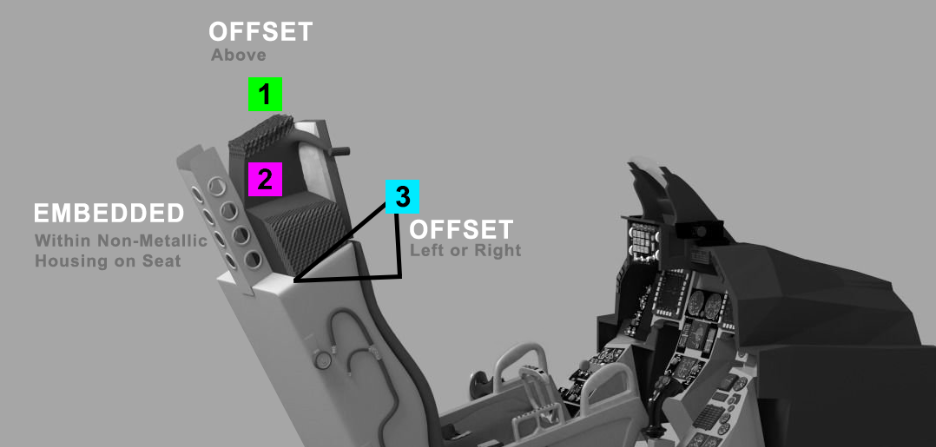
When using VIPER with the Varjo XR-4 Series, users must mount the source near the desired head motion box. It can be embedded inside other components in the simulator. It can also be offset above, left, or right of the seat. Polhemus offers multiple different-sized magnetic sources, allowing users to leverage the best solution for their simulation experience.
For reference on example source placement, see the picture below:
How to Get Started
To use Polhemus’s VIPER head tracking data with the XR-4 Series headsets, users need the new VIPER XR-4 integration kit. This kit contains a specific sensor mount designed for the headset, a software plugin for Varjo Base, and a setup guide. With a few steps, users can add their VIPER electromagnetic motion tracker to their XR-4 headset and begin tracking. Varjo supports the VIPER tracking software plug-in natively within Varjo Base.
Ready to get started? The integration kit from Polhemus provides everything you need to get VIPER up and running with Varjo XR-4 Series headsets. Read more on the Polhemus website or contact Polhemus directly at sales@polhemus.com.