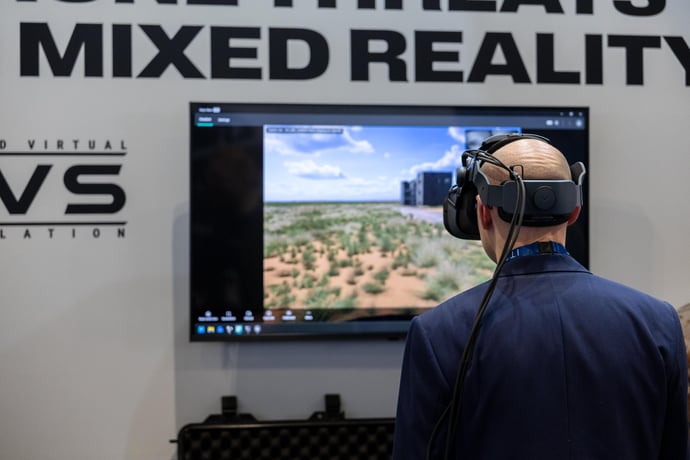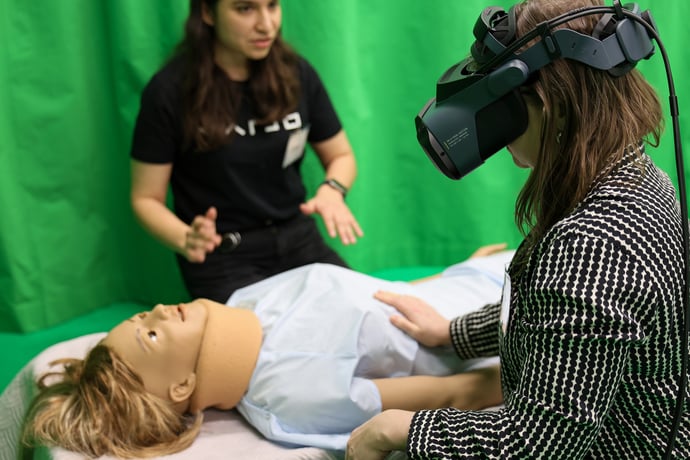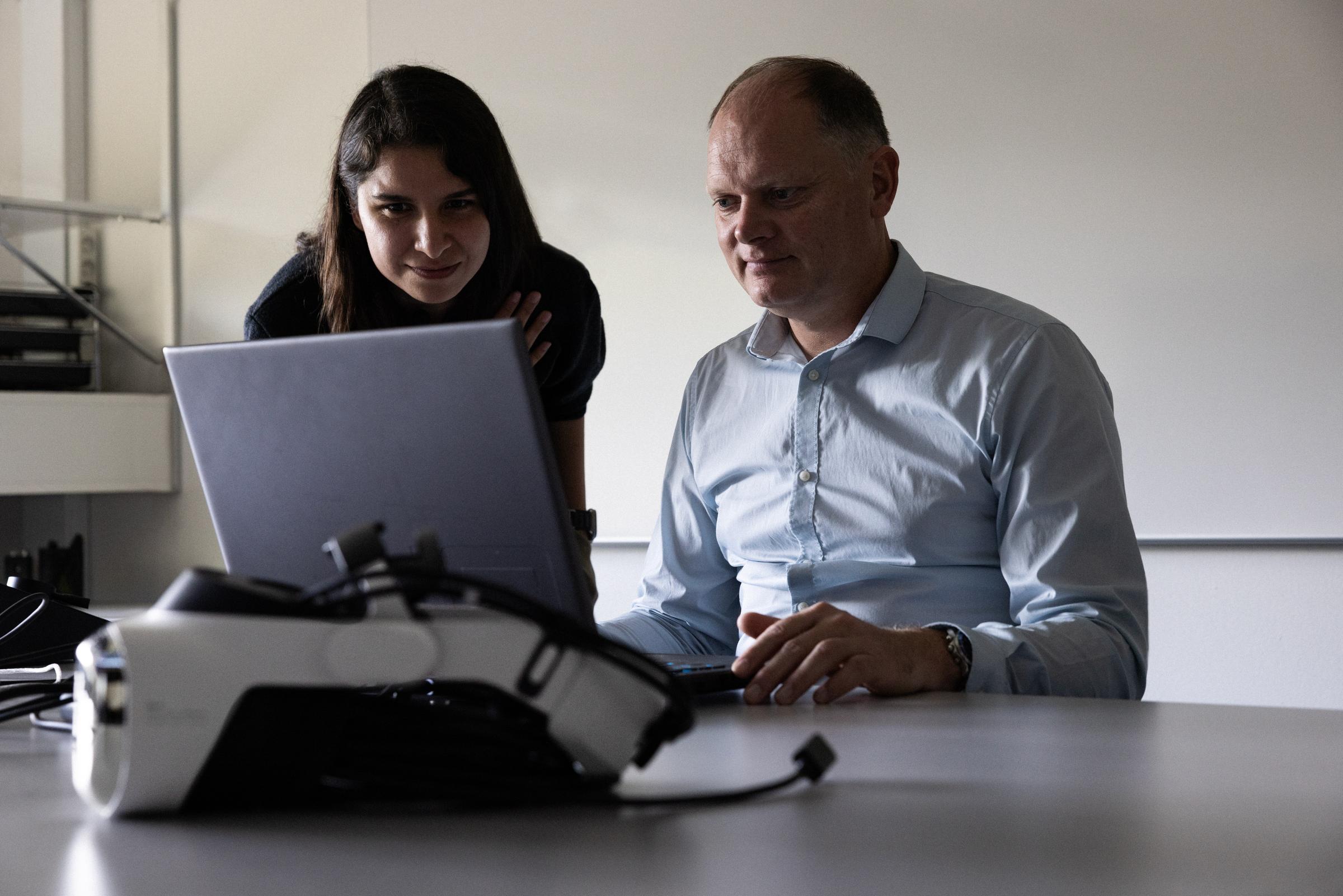
Both the XR-4 and the XR-4 Focal Edition headsets are built on the same XR-4 platform, share the same 4K-per-eye mini-LED displays, and are used by some of the world's most demanding training and simulation programs. But the difference between them can make or break certain use cases. After spending time deploying both across aerospace, defence, and industrial programs, the decision is often simple.
First, the lineup
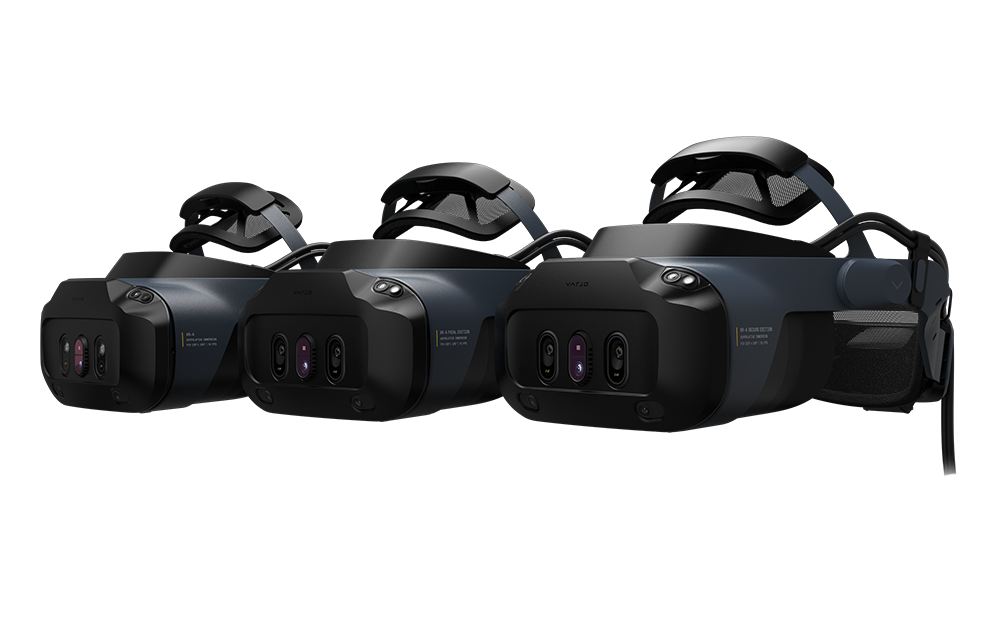
The XR-4 Series currently consists of three variants: the standard XR-4, the XR-4 Focal Edition, and the XR-4 Secure Edition (which is designed for classified and government environments). For most customers evaluating the technology for the first time, the practical question comes down to two: the standard XR-4 with fixed focus passthrough, or the XR-4 Focal Edition with its gaze-driven autofocus system.
A quick word on focal distance in XR
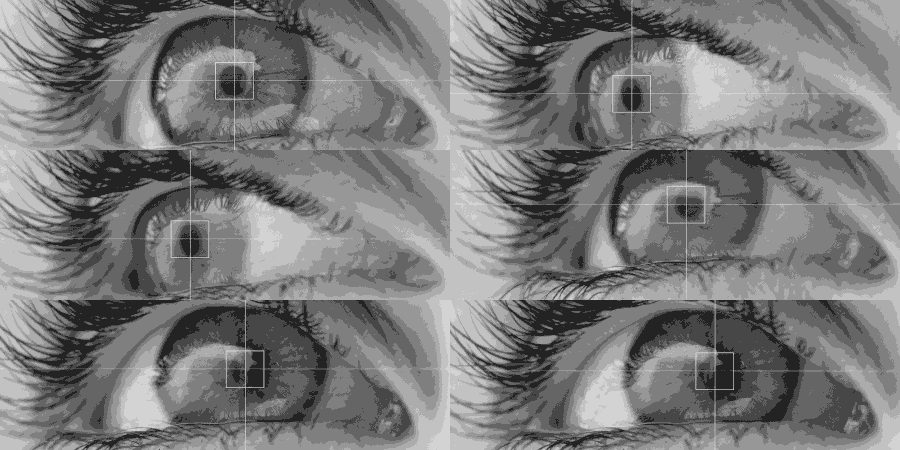
In the physical world, your eyes constantly and unconsciously adjust focus depending on what you're looking at. Reading a checklist 40cm away from your face requires a very different focus setting than scanning the horizon through a cockpit window. This process (accommodation) happens in milliseconds, and it's something we never think about until it stops working correctly.
In XR, passthrough cameras are the lens through which you see the physical world while inside the headset. How those cameras handle focus has a real effect on whether the experience feels natural or slightly "off." Users will notice, even if they can't immediately articulate why.
What fixed focus means in practice
The standard XR-4's passthrough cameras use fixed focus optics. The lens aperture is optimized to maintain a consistent depth of field across the full operating range, meaning objects at different distances from the user all appear reasonably in focus, but none appear maximally sharp. The trade-off is resolution: achieving coverage across all distances requires a smaller aperture, which limits the system to around 33 pixels per degree (PPD) in passthrough.
For context, 33 PPD is still industry-leading for fixed focus passthrough. And for use cases where the physical world serves primarily as a stable backdrop, helping users stay spatially aware of their surroundings while the primary workload is in the virtual layer, it works well. The image is clear and stable.
What Focal Edition means in practice
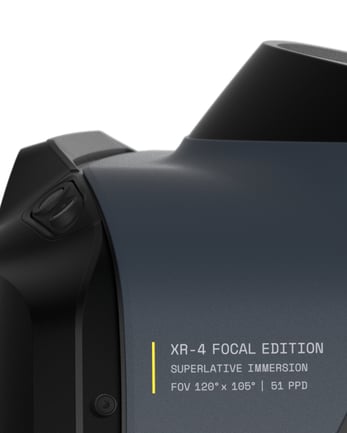
The XR-4 Focal Edition introduces something different: the world's first gaze-driven autofocus camera system in an XR headset. Rather than fixing the depth of field, it dynamically adjusts focus based on exactly where you're looking, at sub-millisecond speed.
It achieves this through a combination of the headset's 200Hz eye tracking and its 300 kpix LiDAR depth sensor, which work together to determine the precise distance to whatever your gaze is converging on. The system then adjusts the camera optics in less than a millisecond, faster than the human eye itself. The result: passthrough clarity of up to 51 PPD, close to what the human visual system can actually resolve.
What that means in practice is that when you look at a physical object (a switch, a gauge, a printed label, a colleague's face) you see it with a level of clarity that starts to feel indistinguishable from natural sight. When you shift your gaze, focus follows. The experience adapts to you.
The key difference: near-field interaction and natural focus transitions
Fixed focus is optimized for consistency across a range. It doesn't fail up close. You can still see nearby objects. But at arm's reach and shorter, the limitations become more noticeable. The image is slightly soft rather than crisp. For tasks that require reading fine detail at close range (instrument labels, maintenance markings, small text on physical controls), this can force users into compensating behaviors: moving their head closer, squinting, leaning in. In a training context, those compensating behaviors are a problem because they don't reflect how the task would actually be performed in the real world.
The XR-4 Focal Edition eliminates that problem. Near-field interaction looks natural because the camera is behaving like an eye. And focus transitions, like shifting gaze from a near-field instrument to a far-field display, happen fluidly and without the user noticing.
Real-world examples
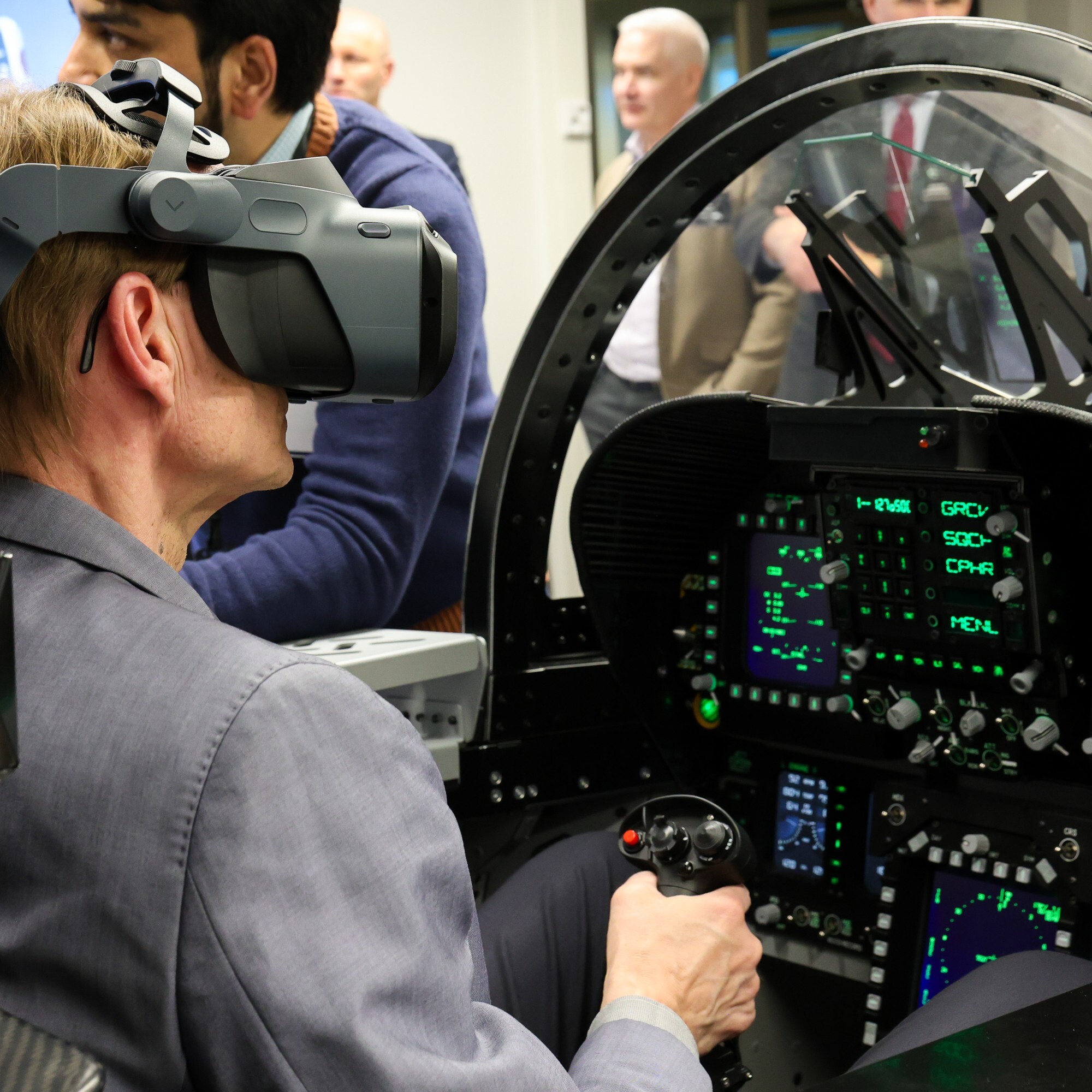
Cockpit and instrument interaction: In a mixed reality flight simulator with a physical cockpit, pilots need to read real instrument labels, interact with physical switches, and scan displays at varying distances, all within a single training session. With a fixed focus headset, instrument markings at arm's reach may be legible but not fully sharp, which can cause hesitation or unnatural head movement. With the Focal Edition, the autofocus tracks gaze and sharpens accordingly. Pilots can read what they need to read, at the distance they need to read it, without adjusting their natural behavior. This is why so many advanced cockpit simulation programs (including customers working with Lockheed Martin's Prepar3D platform) have specified the XR-4 Focal Edition.
Maintenance training: In industrial maintenance workflows, trainees interact with physical parts, read component labels, and follow procedures that may be projected virtually while the physical hardware remains present. Near-field clarity here isn't a nice-to-have. It's the whole point. If a trainee can't clearly read the physical label they're supposed to be cross-referencing, the simulation has undermined itself.
Design review: For teams reviewing physical prototypes alongside virtual overlays (automotive panels, architectural models, product assemblies), the XR-4 Focal Edition adds significant value when near-field accuracy matters. That said, for large-scale design review where content is primarily virtual and the physical environment serves as spatial context, the standard XR-4 can be a practical alternative.
Vehicle simulation: In ground vehicle simulation with physical crew stations, operators need to interact naturally with controls and see real-world markings clearly while the virtual environment surrounds them. As with cockpit training, most crew station environments involve near-field instrument reading and physical switch interaction, which is where the Focal Edition makes a measurable difference to training fidelity.
When fixed focus can be sufficient
The standard XR-4 is a capable system and can be the right choice in certain programs. It is well suited where:
The primary content is virtual, and passthrough serves as orientation and spatial awareness rather than the main visual workload. Training scenarios are designed around virtual objects, environments, or overlays rather than physical instruments the trainee needs to read. The interaction distances are medium to far, or the physical elements present are large and don't require resolving fine detail. Budget constraints require prioritization and the program's training tasks don't critically depend on near-field clarity. Secure Edition requirements don't apply and autofocus isn't needed for the program's operational environment.
.png?width=605&height=758&name=bFrontRight_Focal%20(1).png)
When AUTOFOCUS is the right specification
The XR-4 Focal Edition is the right specification when:
Users must read or interact with real physical objects at arm's reach or closer, particularly text, labels, displays, or switches. Training fidelity depends on users behaving naturally, without compensating for visual limitations. Gaze transitions between near and far physical elements need to feel natural and uninterrupted. The scenario involves a certified or operationally representative physical environment (an actual cockpit, a real vehicle station, a representative maintenance rig) where camera-induced softness would compromise the training value.
A useful rule of thumb: if your users need to read something real, or real world aspects make up an important part of the experience while inside the headset, that's a XR-4 Focal Edition conversation.
How Varjo helps you evaluate which is right for your program
Choosing between the two is rarely something you should do based on a spec sheet alone. The right answer depends on your specific scenario, your physical environment, how your content is structured, and what your users need to do.
This is exactly what the Varjo Alpha team exists to help with. As Varjo's professional services team, we've been involved in some of the most advanced XR implementations in the world: from cockpit integrations to complex multi-system training stacks, from large defense programs to industrial maintenance deployments. We've seen both headsets in real operational conditions and we know where each one performs, and where the difference really matters for training outcomes.
Whether you're at the beginning of a program evaluation or already mid-deployment and questioning whether you have the right hardware, the Alpha team can work through the use case with you, on-site or remotely, and help you build confidence in the decision. You can find out more about Varjo Alpha and request a consultation here.
Conclusion: base the decision on three things
After many conversations on this exact topic, I'd summarize the decision framework this way. Think about your interaction distance: if near-field physical interaction is a core part of the training task, the XR-4 Focal Edition is the better specification. Think about your realism requirements: if users need to behave exactly as they would in a real operational environment, the autofocus system removes a variable that could compromise that. And think about your workflow: if the primary content is entirely virtual and passthrough is only contextual, the standard XR-4 can serve the program well. But in my experience, most programs discover that physical interaction matters more than they initially expect.
Both headsets are built on the same exceptional XR-4 platform. Neither is a compromise. But for defense and training programs where physical interaction is part of the workflow, the XR-4 Focal Edition consistently proves its value. The question is simply which one is right for what you're trying to achieve, and that's a question worth taking the time to answer properly.