Lufthansa Aviation Training is the flight academy subsidiary of Lufthansa and a leading full-service provider of commercial pilot training. Every year, they train more than 700 pilots across six different training centers.
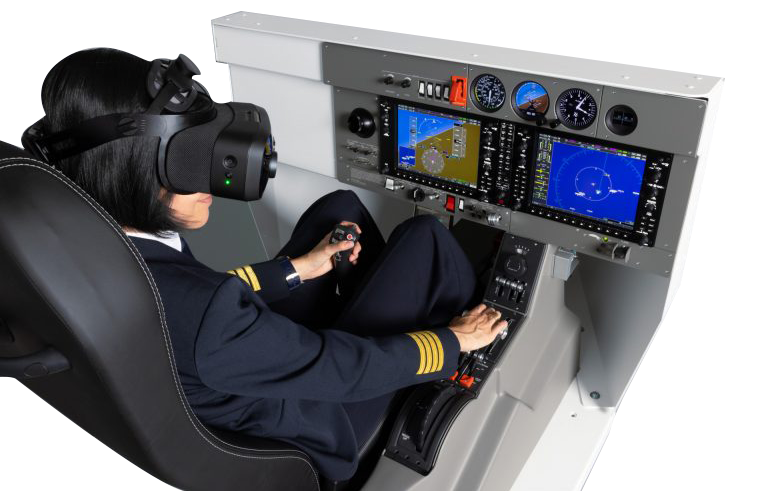
Training in a real aircraft is still the best method of training commercial pilots, but as the number of aircraft and instructors is limited, the number of pilots that can be trained and the frequency of instruction are relatively low. This makes new technologies that can complement training extremely useful.
The search for new technologies led Lufthansa to explore mixed reality simulator solutions with BRUNNER and Varjo. The result was a better simulator experience that will help pilot trainees reach their targets quicker, become more professional, and do it at a lower cost, in a more environmentally friendly way.
2. The Royal Australian Air Force Pioneers VR/XR Military Medical Training
.jpg?width=800&height=547&name=_w5a3107%20(1).jpg)
The Royal Australian Air Force’s Health Operational Conversion Unit is using mixed reality, powered by Varjo headsets and the BlueRoom system, to train its medical personnel for demanding operational environments. This immersive VR training solution allows doctors, nurses, and medics to practice procedures – from aeromedical evacuation to field-hospital scenarios – in highly realistic virtual environments that mimic aircraft cabins, combat zones, and other mission contexts. Mixed reality offers efficient, hands-on practice with real equipment in risk-free settings, reducing logistical challenges and costs associated with full-scale exercises. XR also enables unrestricted access to repeatable training scenarios.
By blending physical tools with virtual surroundings, RAAF's XR training solution bridges the gap between classroom theory and real-world operations, enabling RAAF trainees to build confidence and refine their critical skills under simulated stressors, such as noise and environmental complexity. The system supports a wide range of medical tasks and can be adjusted in real time by instructors, helping ensure that personnel are deployment-ready and better prepared to respond decisively in actual missions. Read more.
3. How the Slovenian Armed Forces Are Driving Operational Readiness with VR/XR
Watch The Film
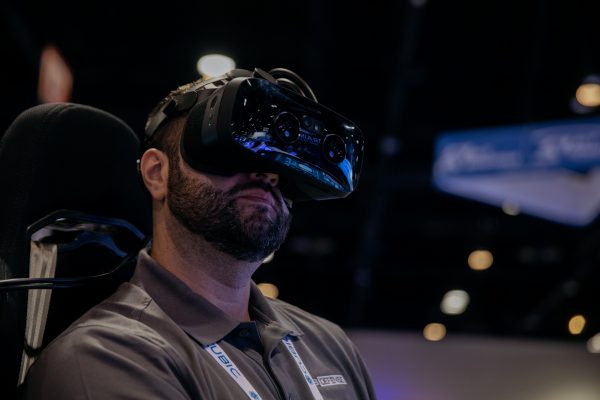
Due to the lack of domestic dome simulator capabilities, the Slovenian Armed Forces previously relied on facilities outside Slovenia for pilot training on platforms including Bell helicopters, Cougars, and the PC-9. This led to accessibility limitations. “We didn’t have any solutions for tactical simulation. We relied on foreign facilities, which caused significant scheduling difficulties. The dome simulators we had access to didn’t match our aircraft accurately,” says Lt. Col. Gregor Virant, Chief of Strategic Events and Policy at SAF.
Acknowledging the urgent need to improve the quality of their training programs, SAF partnered with the simulation company AFormX to technologically modernize their tactical flight training with VR training solutions. The partnership has resulted in the creation of three high-fidelity simulators powered by Varjo headsets: a Virtual Reality (VR) simulator for the SWIFT light attack aircraft, a Mixed Reality (XR) simulator for the same aircraft, and a VR simulator for the AS532 Cougar helicopter.
Integrating virtual and mixed reality simulation into SAF’s training programs has already improved pilot performance and operational readiness. Pilots are now able to rehearse complex maneuvers in a realistic, risk-free environment, which has boosted pilot confidence and competence and enabled more effective mission execution from the very start. Read more.
4. FORCE Technology Achieves a Thousandfold Cost Reduction in Maritime Training with VR/XR
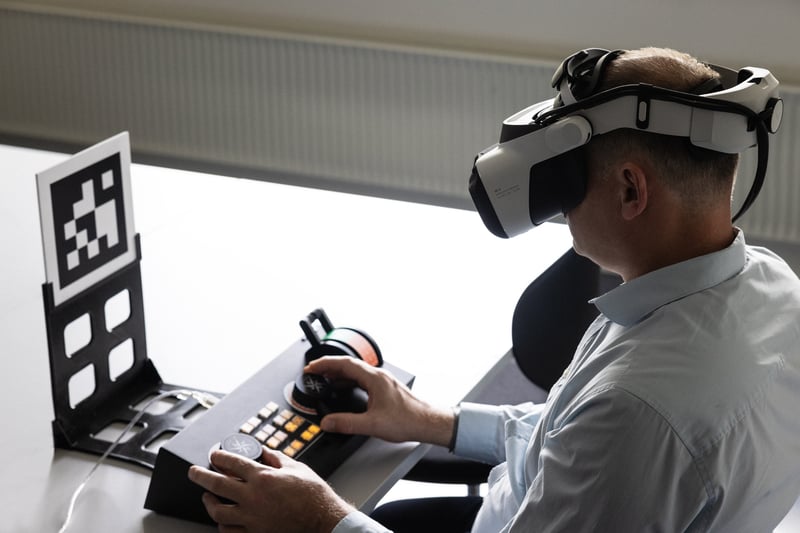
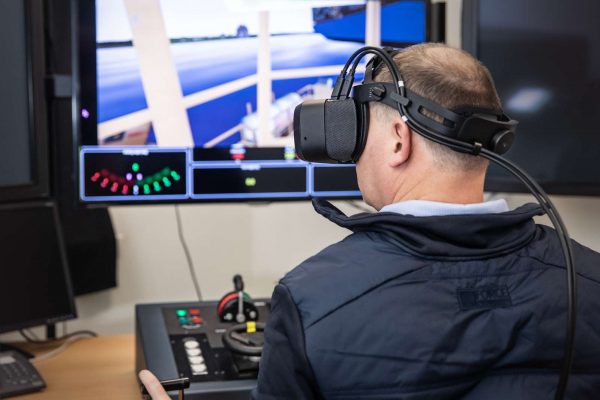
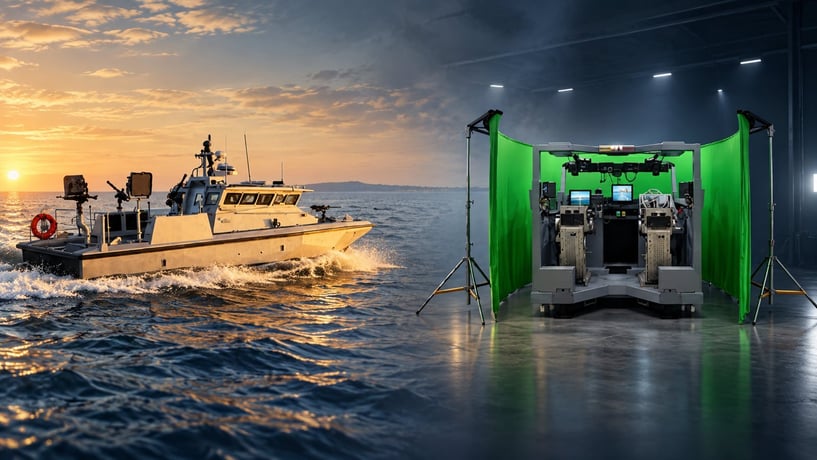
FORCE Technology is a global leader in the maritime simulation space that provides training to employees of the biggest naval companies in the world. They offer cutting-edge ship bridge simulators and are always looking to advance the training technology further. As maritime training shares many of the same challenges as pilot training, it led them to partner with Varjo to explore how the next generation of naval simulation could be built.
Simulators have many benefits over training with actual vessels: you can practice maneuvers that are hard or impossible to train with real vessels, the operating expense is much lower due, and you can easily implement different weather conditions. They are not without drawbacks, though. They typically cost around 1-10 million dollars per unit, they need large facilities, and the portability is practically nonexistent, so training volumes and cost savings are limited.
Now, FORCE Technology is bringing about a second generational shift in maritime training with the help of Varjo’s virtual and mixed reality. The new simulator solution leverages Varjo headsets to achieve major portability benefits and a thousandfold cost reduction.
5. Rheinmetall Scales Battlefield Readiness Through XR Driving Simulation
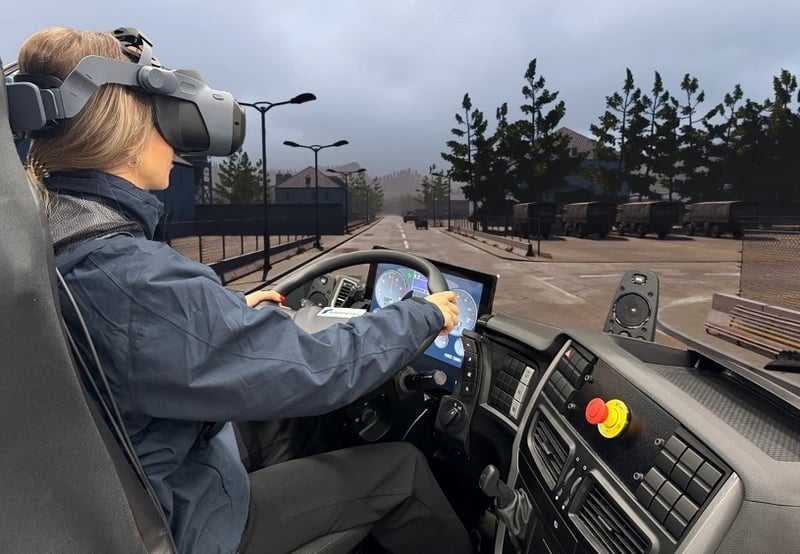
Rheinmetall is using the refreshed Varjo XR-4 Series in its high-fidelity driving simulators to support large-scale military vehicle training. The VR solution recreates realistic battlefield driving conditions, enabling individual soldiers and full-vehicle crews to train in mixed reality. Real cockpit hardware is combined with fully virtual terrain, weather, and combat scenarios. This helps trainees develop critical driving skills safely before operating real vehicles.
Rheinmetall's mixed reality simulator setup is portable, reconfigurable, and adaptable to different vehicle types and training locations. This flexibility allows armed forces to expand training capacity without relying on fixed simulators. It also supports decentralized training as fleet sizes grow and readiness demands increase. Rheinmetall sees XR as a key enabler for future defense training beyond driving simulation, with Varjo playing a central role in scaling immersive training solutions. Read more.