From the tool to the task
For decades, aviation training has largely classified simulators into defined categories and levels. The more capable the simulator, the more training it can support. That approach used to make sense when the technology could be fit neatly into these categories:
FSTD — Flight Simulation Training Device. The umbrella term for anything that isn't a real aircraft but teaches you to fly one. A cockpit mockup is an FSTD. A full simulator is an FSTD. A VR headset is an FSTD.
FFS — Full Flight Simulator. The big one. An enclosed replica cockpit on hydraulic legs that tilt and shove you around, wrapped in projected visuals. Excellent machine. Costs millions. Lives in a purpose-built building. There is usually a waiting list.
FTD — Flight Training Device. The middleweight contender, but likely the most impacted category by Task to Tool. Occasionally motion based, these simulators feature high-fidelity cockpits with specific or representative switches, screens, and flight characteristics. They fit in a typical office building, cost a fraction of a Level D Full Flight Simulator (FFS), and allow pilots to log significant procedural and systems time without the substantial overhead.
Level D. The top qualification grade an FFS can hold under today's rules. Level D is essentially a badge that says this device is good enough that time in it counts as time in the aircraft.
FTD Level 2. The top FTD level for fixed-wing aircraft under EASA rules. It gives you an exact cockpit replica, pin-point flight dynamics, and full control loading. It isn't a Level D FFS, but it carries official authorization for pilots to log serious procedural, type-rating, and instrument hours at a fraction of the operating cost.
Regulators award "training credit" (official permission to log training in a device instead of a real airplane) based largely on which category a device falls into. Level D FFS at the top, simpler devices below it, credit trickling down accordingly. But simulation technology has changed dramatically.
Today’s fixed-base devices offer capabilities that were unimaginable when many of the existing regulations were established. However, extended reality technologies, along with other innovative training systems, don’t always align seamlessly with traditional simulator categories. That’s where EASA’s new FSTD Capability Signature, or FCS, comes in.
From one grade to 14 capabilities
Instead of describing a simulator primarily by one overall qualification level, the FCS describes its capabilities across 14 different features, including flight deck, aircraft systems, flight performance, visual systems, motion, navigation, weather and terrain.
Each capability is assigned a fidelity level. The result is a much more detailed picture of what a training device can actually do.
And that leads to the basic idea behind Task to Tool: Start with the training task, then select the tool that provides the capabilities required to accomplish it.
EASA’s new methodology is optional for certain type-rating and recurrent-training applications, but the philosophy behind it represents an important shift in how the industry thinks about simulation.
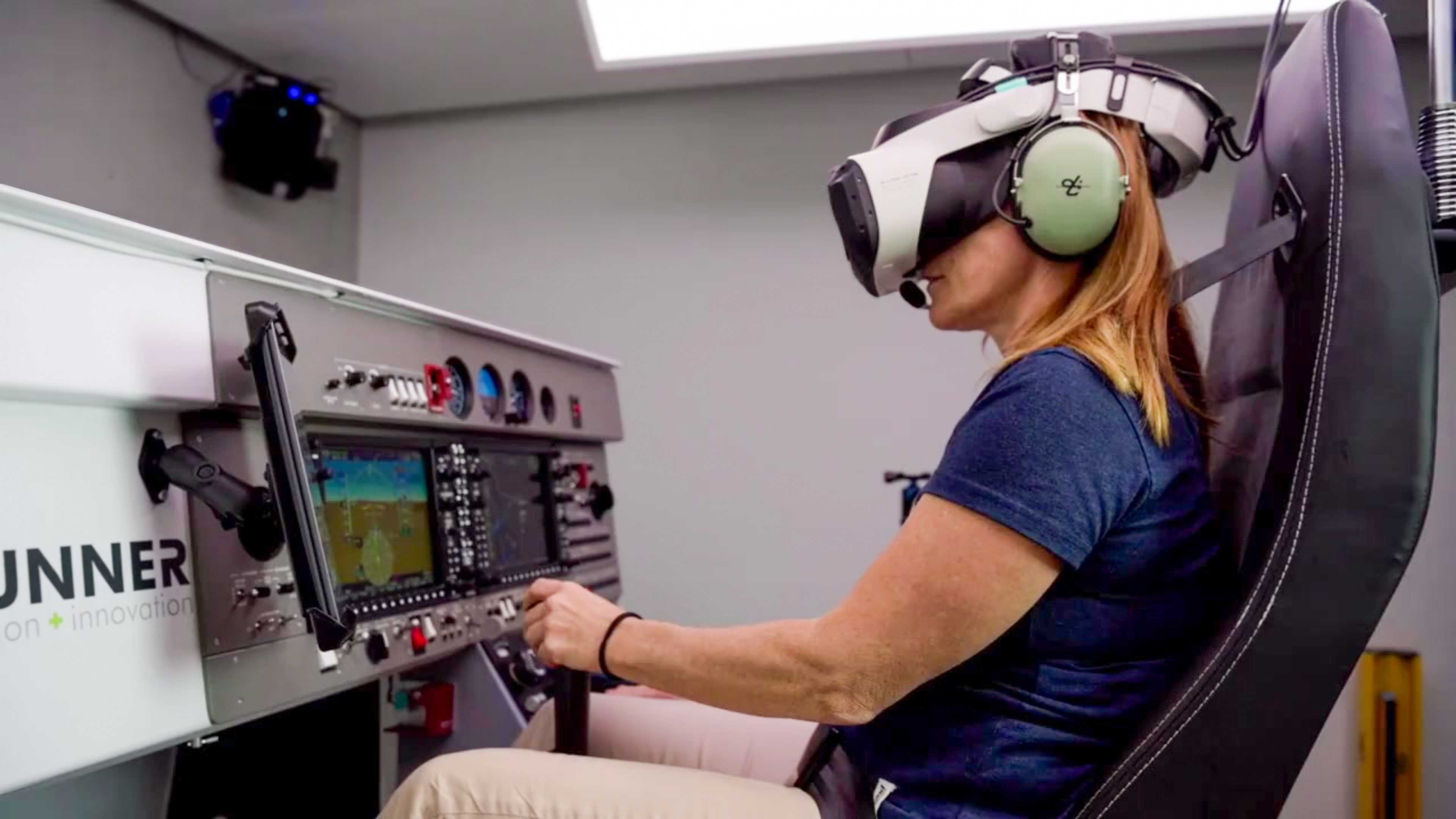
Brunner NOVASIM: Level FNPT II Qualified by EASA
Why does this matter?
Not every training task requires a multimillion-dollar full-flight simulator. A full-flight simulator remains essential for many training objectives. Motion, high-fidelity flight dynamics and other capabilities are incredibly valuable when the training requires them.
But other tasks may not need all that capability. Such as:
- Cockpit familiarization
- Checklist and procedure training
- Visual maneuvers
- Spatial orientation
- Local-area familiarization
- Decision-making and crew coordination
The question should be: What does the pilot need to learn?
Then consider: What capabilities does the training device need to provide?
That is a much more logical way to build a training ecosystem.
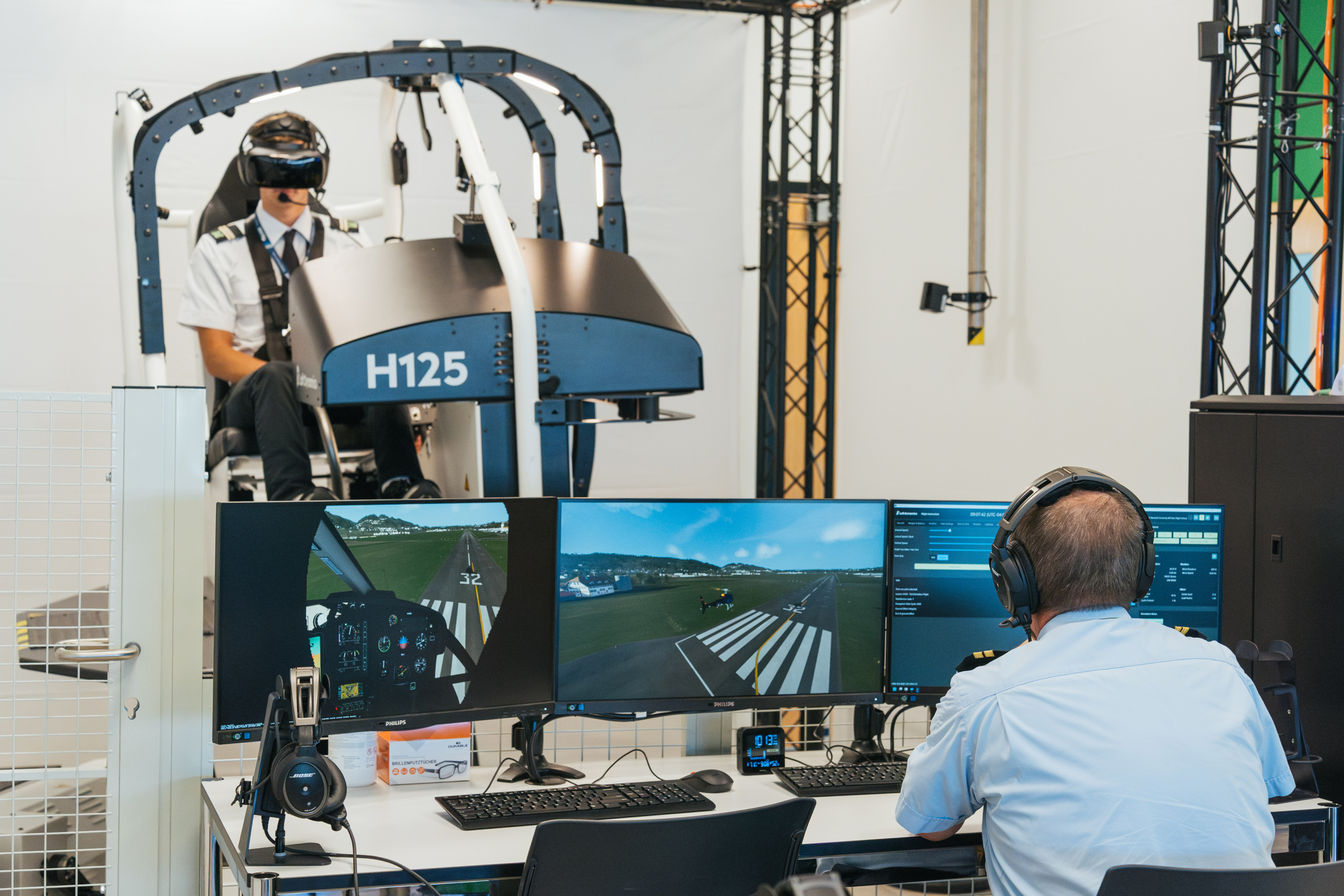
Loft Dynamics H125 helicopter simulator: FTD Level 3 Qualified by EASA
Where XR fits
XR can provide a life-size, immersive cockpit and surrounding environment without requiring every training scenario to be built around a traditional full-flight simulator.
XR technology can also provide capabilities that matter to specific training tasks. A pilot can look around the cockpit naturally. They can interact with the environment. Training can be conducted in scenarios that would be difficult, expensive or impractical to reproduce in a traditional training device.
And because the system is digital, it can also capture information about what the trainee actually did.
That last part may become increasingly important.
Better evidence
The industry is already moving toward Competency-Based Training and Assessment (CBTA) and other approaches that focus more heavily on what a pilot can do.
That creates an interesting opportunity for immersive technology. Traditional simulation can tell you that a pilot made an error. More highly instrumented systems can potentially help explain why.
If a pilot misses an altitude deviation, for example, was it a problem with aircraft control, situational awareness or attention allocation? Eye tracking and other forms of objective data may help instructors understand what was happening during the event.
That moves the conversation beyond: “Did the pilot make the mistake?”
Toward: “What happened, and why?”
For regulators and training organizations evaluating new technologies, that kind of evidence could become increasingly valuable.
XR isn’t replacing the full-flight simulator
To be clear, I don’t believe the full-flight simulator is going away, nor should it. There are training tasks where its capabilities are exactly what we need. The opportunity is to stop assuming that every training task requires the same tool.
The goal shouldn’t be to replace one simulator with another. It should be to build a training ecosystem where each tool is used for the work it does best.
Reiser Mixed Reality H145 D3 Simulator: FTD Level 3 Pre-Qualified by EASA
We’ve already seen this happen: Case
REISER
The part of this story I find most persuasive is that XR didn't wait for the new framework.
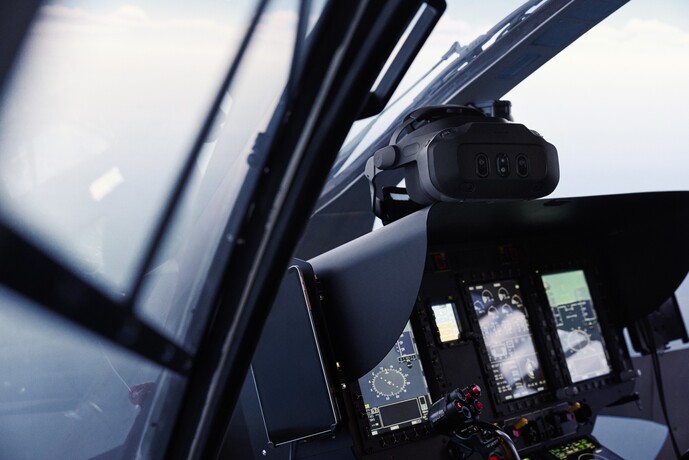
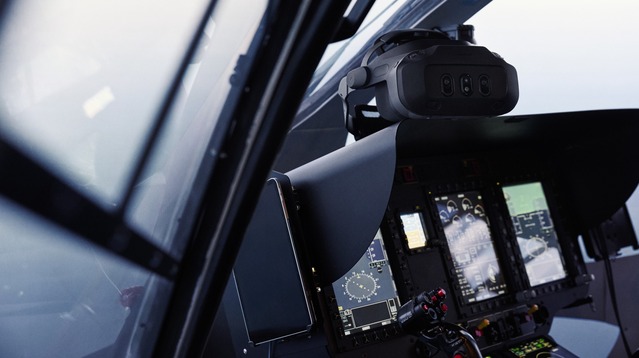
One of the most interesting examples is REISER Simulation and Training’s H145 D3 mixed-reality simulator. The system has been qualified by Germany’s Luftfahrt-Bundesamt (LBA) as an FTD Level 3 (an FAA Level 7 equivalent) and is operating at Lufthansa Aviation Training in Frankfurt at eight to ten hours a day per Lufthansa/Reiser. The device combines a physical cockpit with a mixed-reality environment and is designed to support procedures, systems training, normal and abnormal operations, and crew training.
It is a good example of something that would have been difficult to categorize under older assumptions about what a simulator was supposed to look like. And that’s really the point. The technology doesn’t need to look like yesterday’s simulator to deliver meaningful training.
Getting to certification required EASA to create special conditions, because the regulations (circa 2012) did not consider head-mounted displays, XR, etc. REISER proposed threshold values for brightness, resolution and vernier acuity.
The regulator's response is the detail I love: the LBA came back and asked them to set the brightness threshold higher, because a headset outclasses a projection system by orders of magnitude and the rules should reflect that.
Additionally, Varjo and REISER have co-developed measurement rigs for dynamic field of view and brightness, and Training Device Manufacturers (TDMs), such as TRU Simulation, developed quarterly test procedures so schools can verify their headsets stay in tolerance over a device's full service life.
The bigger change
EASA's Task to Tool reflects a broader change in aviation training. For a long time, we have started with the device and asked:
“What training can we do in this?”
The emerging model starts somewhere else:
“What training do we need to accomplish, and what tool is best suited to accomplish it?”
That may sound like a small distinction, but it isn’t.
Task to Tool is akin to a military concept that has been employed for years—essentially, “self-certifying” and accrediting “part-task trainers” based on demonstrated training effectiveness rather than formally labeling everything as a simulator. If a device consistently builds a real skill, put it into practice and let it count. Introducing that task-to-tool flexibility into commercial regulations could fundamentally transform how an industry grappling with pilot shortages, safety demands, and rapid technological advancements designs training for the next generation.
That's why I believe the future of simulation isn’t about choosing between traditional simulators and XR, but about using the right tool for the task.
- Emma Vandore, "Task to Tool: Why EASA's Biggest Simulator Reform in Decades Matters," Halldale Group, 4 August 2026
- Reiser, REISER Press Release – Full LBA Qualification, 30 March 2026
- Gideon Ewers, “REISER XR Simulator Now Fully LBA-Qualified to EASA Standards,” DRF Akademie / Lufthansa Aviation Training Press Release, 24 July 2026