Eurosatory is my home show. I cover France for Varjo, so Paris-Nord Villepinte is where a lot of my year quietly points, and this edition was the biggest the exhibition has ever staged.
Nowadays, I often hear negative and pessimistic discourse about the current positioning of France on the world stage. Eurosatory tells a different story. Pulling off an event this large reflects strong momentum in heart of my country and running it this cleanly is a serious organizational achievement. The COGES Events team and General Charles Beaudouin certainly earned the credit for that.
The industrial players who filled the halls were not coasting either, innovating and investing seriously, with European sovereignty running through almost every conversation. All of it pulled in the same direction, which made this the easiest edition to get a reading on in a while.
The numbers set the scene. Held in one of Europe’s largest exhibition centers, Eurosatory 2026 extended into Hall 4 for the first time, covering around 185,000 square meters, which the organizers say makes it the largest event of its kind anywhere.
More than 2,600 exhibitors from 68 countries took part, alongside 40 national pavilions and more than 350 official delegations from 100 countries. Thirty-six percent of exhibitors were there for the first time, which tells you how fast the ecosystem is widening beyond the traditional primes. Ukraine's presence grew roughly eightfold to around 80 firms, making it one of the largest delegations on the floor.
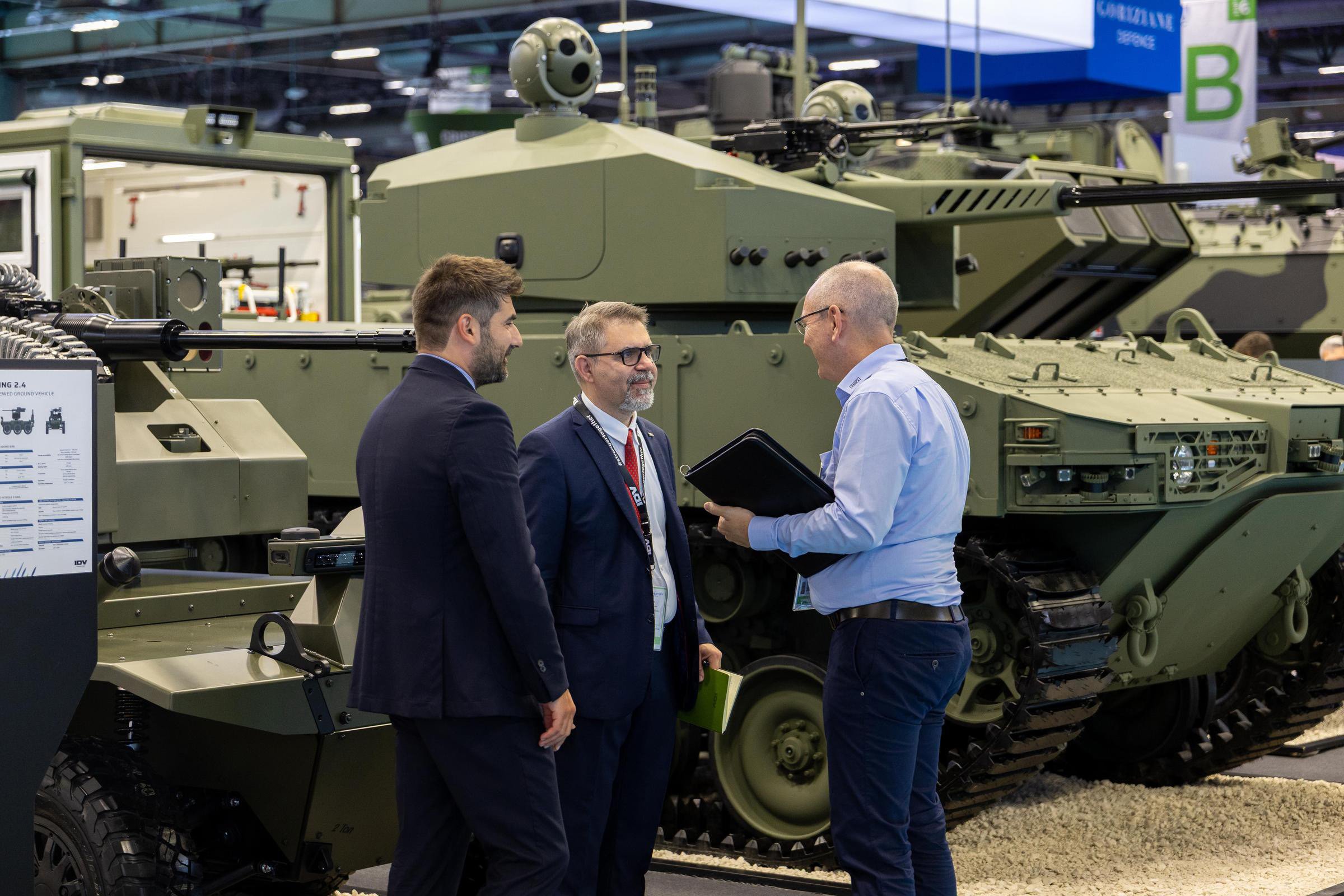
If you want the mood of the show in one word, it was urgency. This was the first Eurosatory held fully inside the ReArm Europe moment, with procurement timelines compressed by four years of high-intensity war on the continent. That urgency was visible in the kit, in the conversations on the stands, and in the sheer number of partnership and co-production agreements signed during the week.
Drones, and the things that DESTROY drones, were everywhere
No single theme came close to the unmanned story. Drones and counter-drone systems were the organizing idea of the entire exhibition. Almost every major platform on the floor arrived paired with a way to defeat hostile drones, and observers covering the show made the same point repeatedly: the anti-drone system has become as standard as the vehicle it protects.
You could see it in the cluster structure too. Eurosatory grouped exhibitors into capability areas this year, and the headline clusters were autonomous systems, counter-UAS, AI-driven battlefield networking, directed energy, electronic warfare, and, for the first time in the show's history, space as an operational domain. Companies like Ondas and the UK-built VisionWave used the show to launch whole families of autonomous air and ground platforms designed to work as one connected system rather than as single products. Rheinmetall brought a Lynx fighting vehicle with an integrated counter-UAS kit. The conference program alone ran to more than 140 talks and over 300 speakers.
The host nation made its own ambition very clear. France used Eurosatory to set out a plan to build a force of roughly 20,000 military drones, having fielded around 4,000 by the end of 2025 and now moving to buy around 14,000 more, backed by an extra 10.5 billion euros earmarked for missiles and drones. The part that stayed with me was the stated intention to eventually train every soldier to operate drones.
Hold that thought.
THE SIGNAL AT THE ENTRANCE TO HALL 6
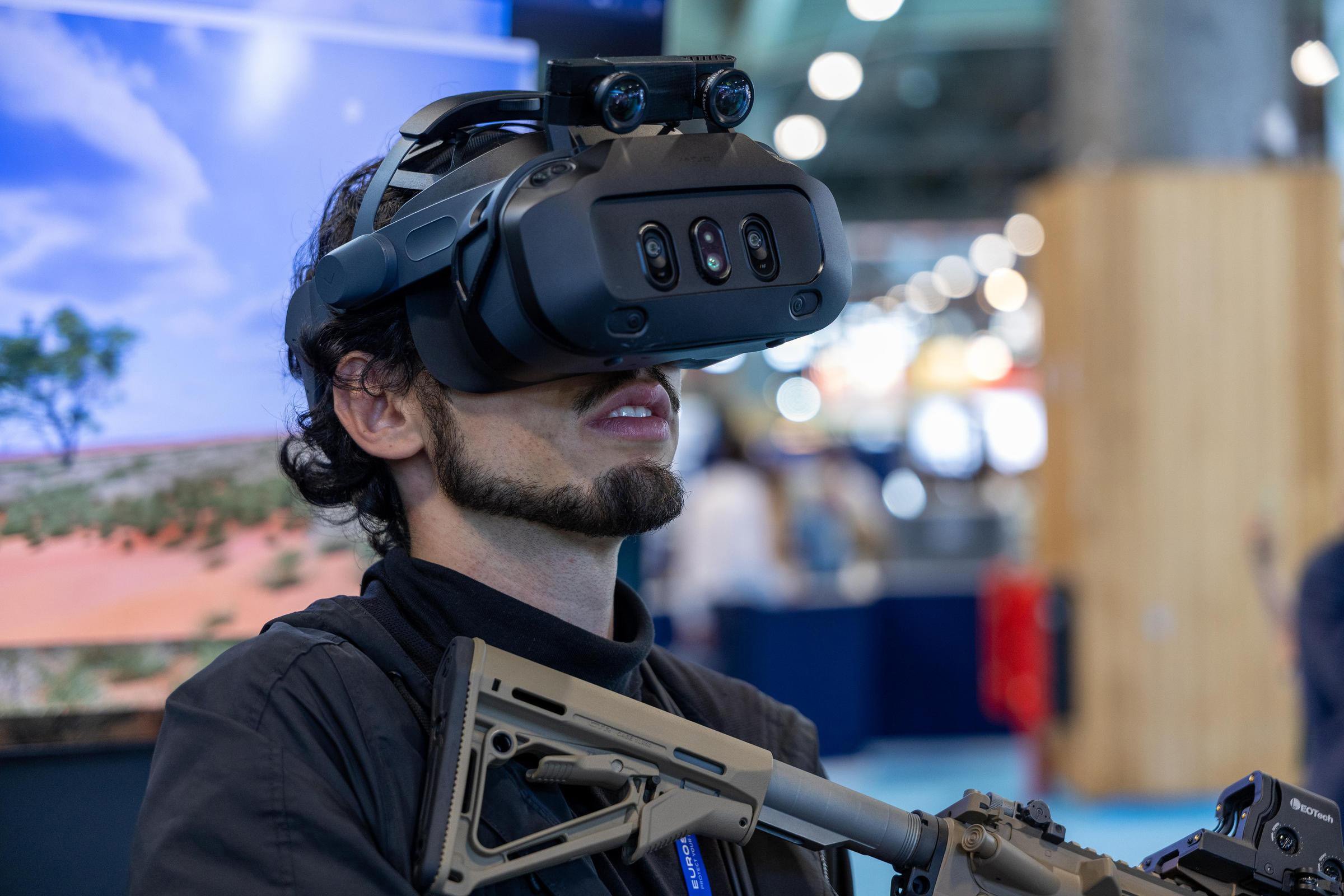
Walking into Hall 6, one of the first thing visitors saw was XR. Varjo was positioned right at the entrance, and in hindsight, that felt exactly right. Everything deeper in the hall depends on trained operators. The training layer came first.
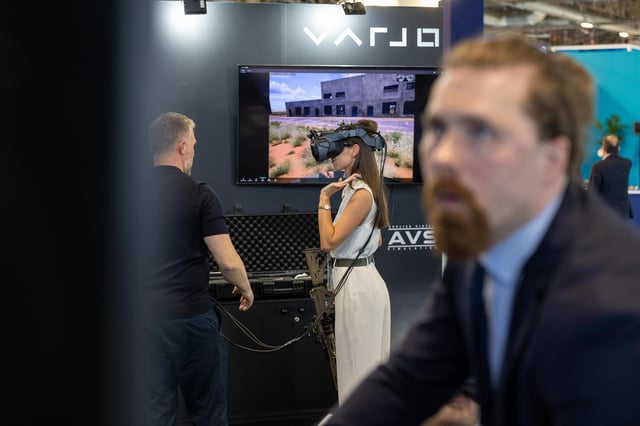
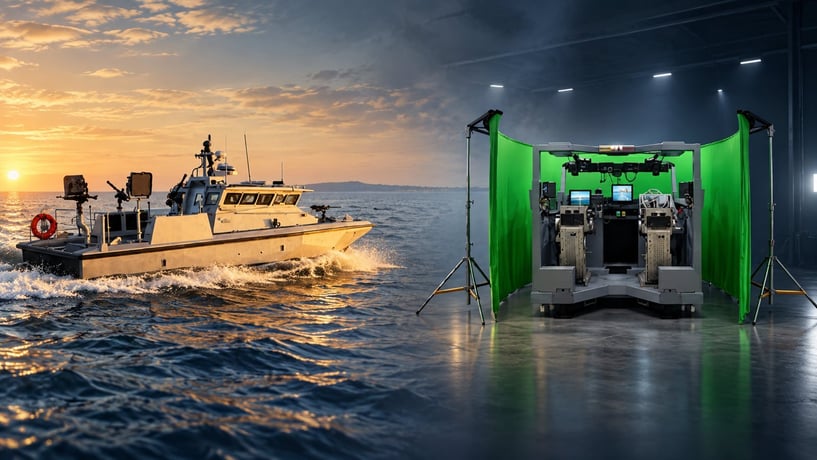
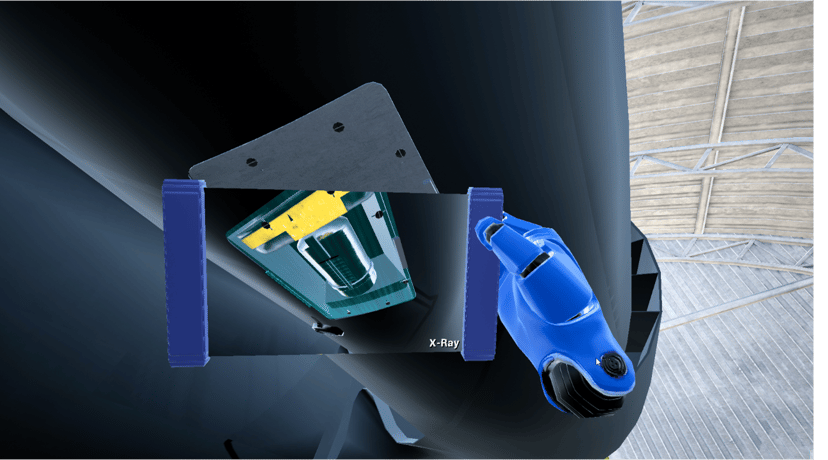
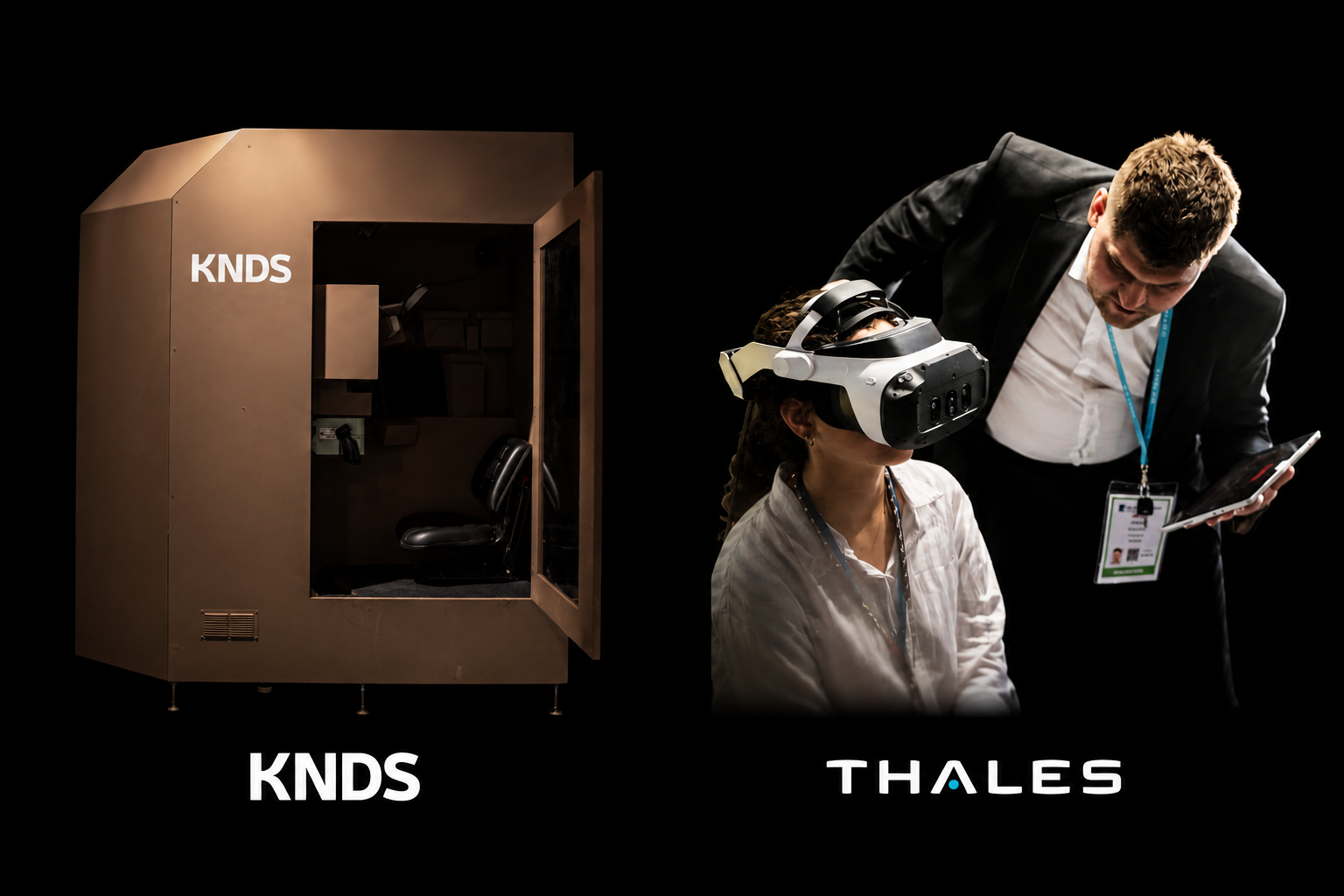
And it was not only our own stand. Walk the floor and you found Varjo headsets running inside other companies' demonstrations, which says more about where XR adoption has reached than any keynote could. Thales used them for a helicopter helmet demonstration. KNDS ran a Leclerc tank simulator on our headsets, paired with VRAI.
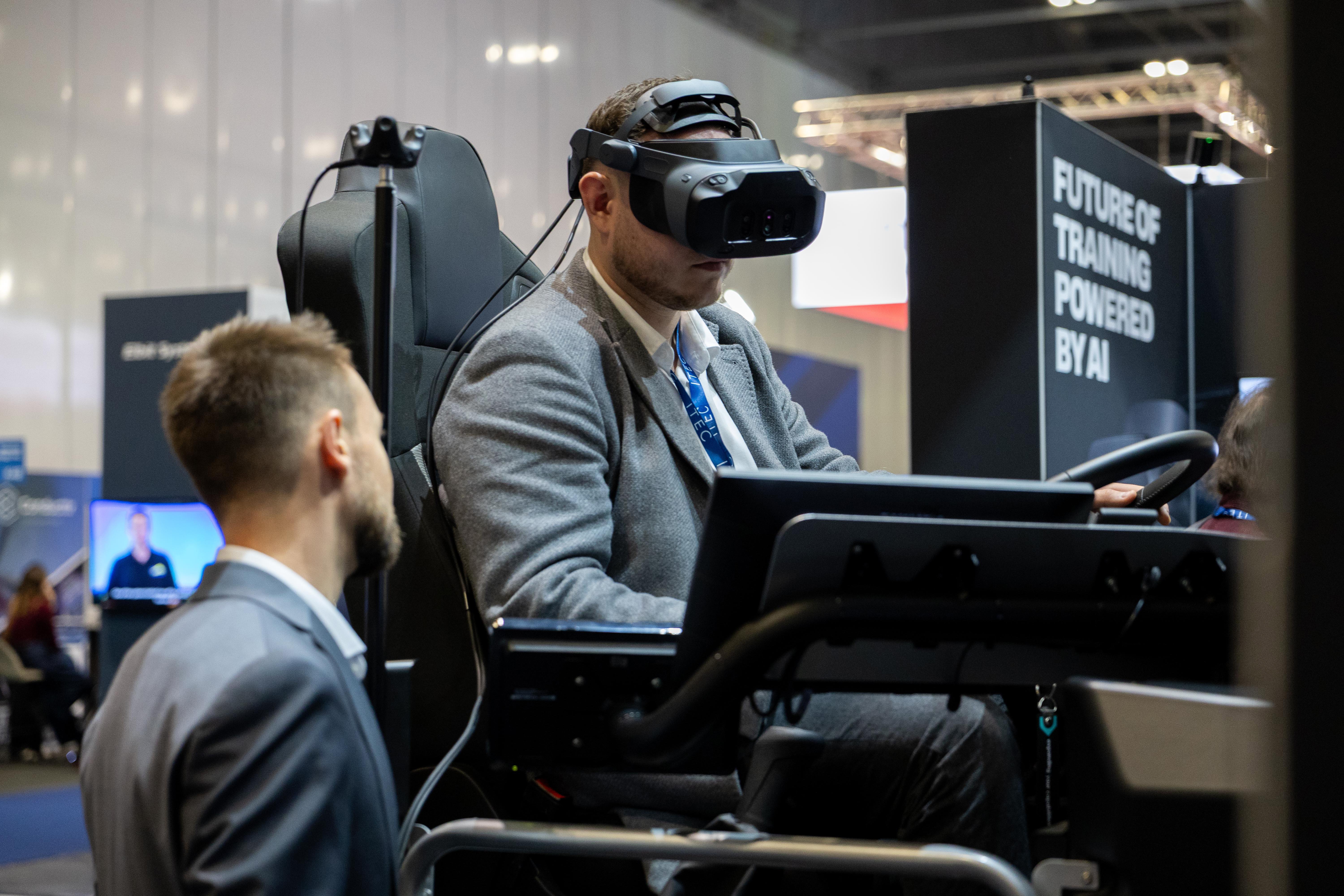
Exail built a truck simulator around them. When primes of that size choose to show their own capability through your headset, the technology has moved from interesting to expected.
Here is the thing that gets less stage time than the platforms. Every system I have just described, the drones, the counter-drone effectors, the autonomous ground vehicles, the AI-enabled command tools, has to be put into the hands of people who can use it under pressure. A capability is not a capability until someone is trained on it. And the rate at which new kit is being fielded right now is far faster than the rate at which traditional training can absorb it.
That is the gap the show kept walking past. You can buy 14,000 drones in a procurement cycle. You cannot stand up 14,000 competent operators on live ranges in the same window. The hardware scales with money. The training does not scale the same way, because live training is limited by ranges, airframes, instructor time, weather, safety, and cost. Those limits do not move just because the threat does.
WHY XR IS THE PART OF THE FLOOR THAT SOLVES FOR SCALE
This is the case I make to French customers every week, and Eurosatory made it for me. If the requirement is to train a whole force on systems that did not exist eighteen months ago, XR is the only training technology that meets it at scale.
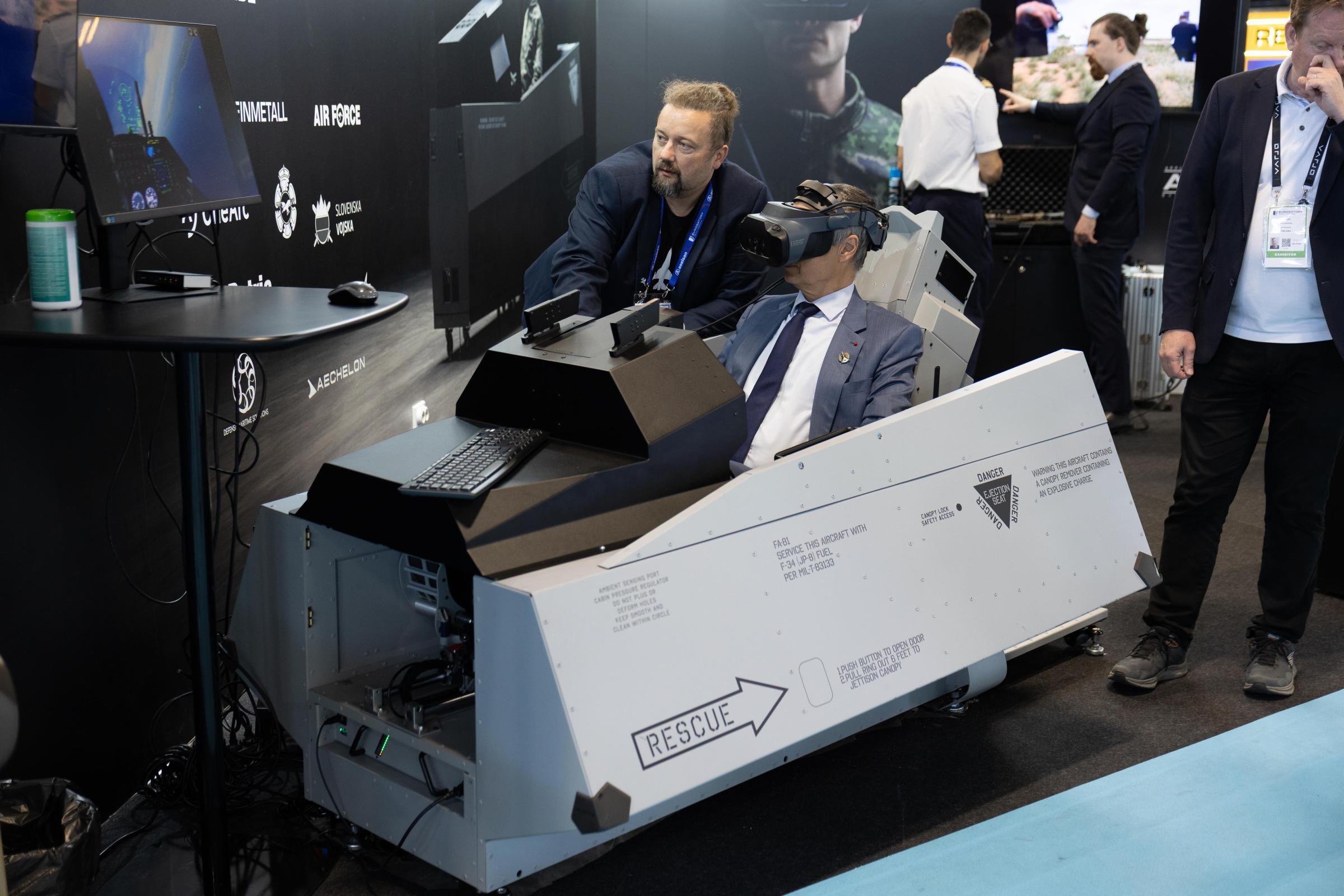
The reasons are practical, and they are the same ones our customers keep raising:
- Repetition without the live cost. A drone-operations or counter-drone scenario can be run hundreds of times in XR for the marginal cost of nothing. Ranges, airspace, and consumable threats are expensive, scheduled, and finite. Repetition is where competence actually comes from.
- One trained instructor reaching many trainees. When a force is trying to take training from a few hundred specialists to the whole organization, the instructor-to-trainee ratio is the bottleneck. XR lets a small cadre of qualified instructors train far larger groups than a live range allows.
- Train in the gear you fight in. Helmets, gloves, body armor, comms, restricted visibility. These are the baseline for defense training, not edge cases, and XR lets people rehearse with the real constraints they will operate under.
- The data to prove it worked. Modern training is judged on whether competence transfers, not on whether a box was ticked. XR captures performance and gaze data and supports proper after-action review, so instructors can see where trainees actually struggle. This is exactly why we partnered with VRAI, whose HEAT software uses the XR-4's eye tracking to turn a session into a near real-time read on cognitive load and performance. Running that pairing with the Irish Defence Forces and Rheinmetall has already taken armor-crew training from around one instructor per three trainees to one per twelve, with no extra instructor workload.
- Deployable, not tied to a fixed site. Readiness cannot depend only on a handful of permanent facilities and scheduled windows. XR systems that set up quickly in real facilities put training where the people are.
None of this is a claim that XR replaces live training. It is the claim that the volume of training now being asked for is simply not reachable any other way, and that the show floor, full of systems that all need operators, was the proof.
A EUROPEAN POINT, FROM A EUROPEAN SHOW
There was one more thread running through the week that matters to me as someone selling into France and West Europe. So many of the agreements signed at Eurosatory were about sovereignty: local manufacturing, sovereign capability, supply chains that do not depend on anyone else. If a continent is rebuilding its defense-industrial base, it makes sense for the training layer to sit on the same footing. Being a European XR company, built for the security requirements these customers actually have, is a conversation that landed differently this year.
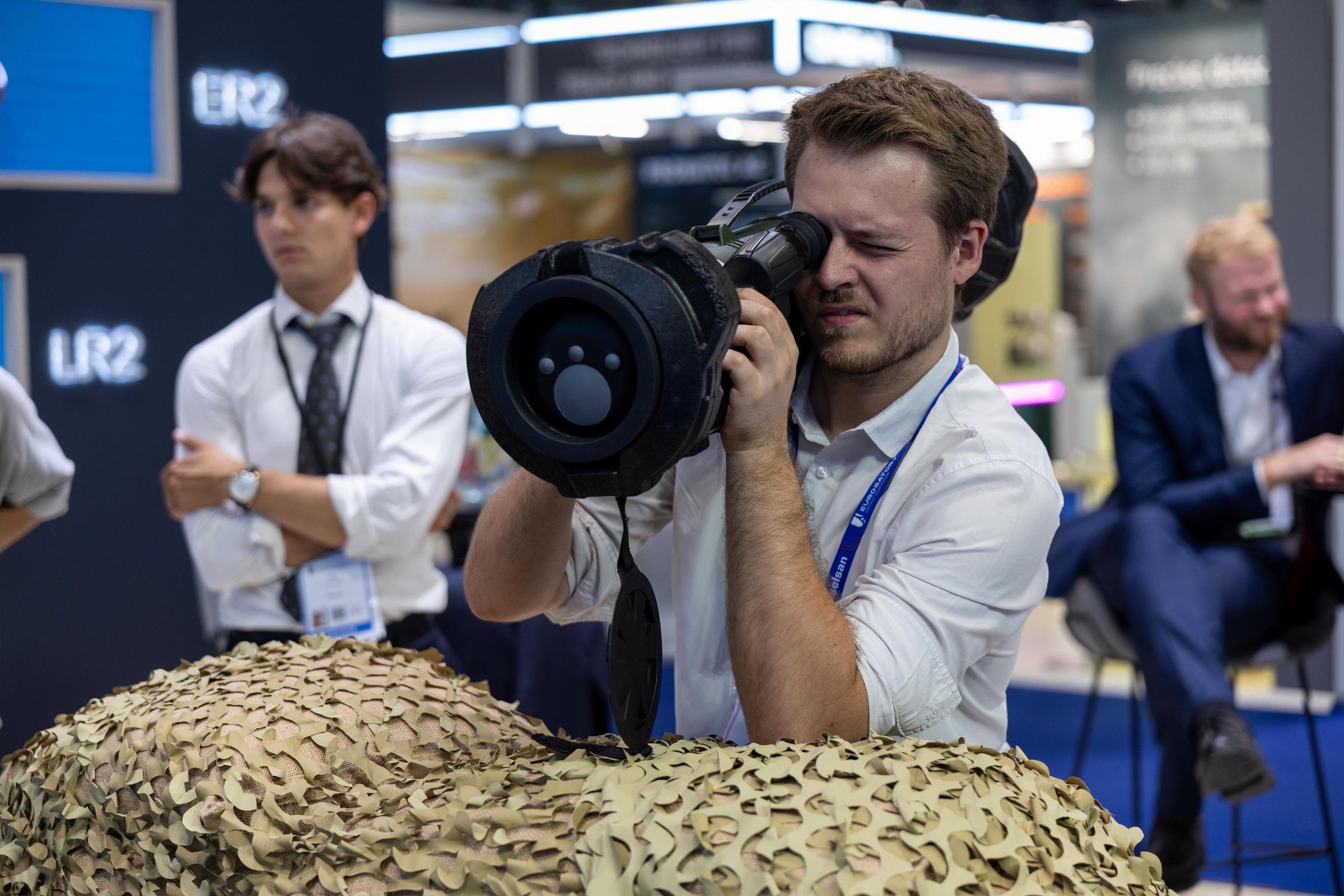
WHAT I TOOK HOME
Eurosatory 2026 was a record in every measurable way, and the storyline was clear before the doors even opened. The floor was full of new capability arriving faster than ever. The quiet, unglamorous question underneath all of it is who is going to be ready to use any of it, and how quickly.
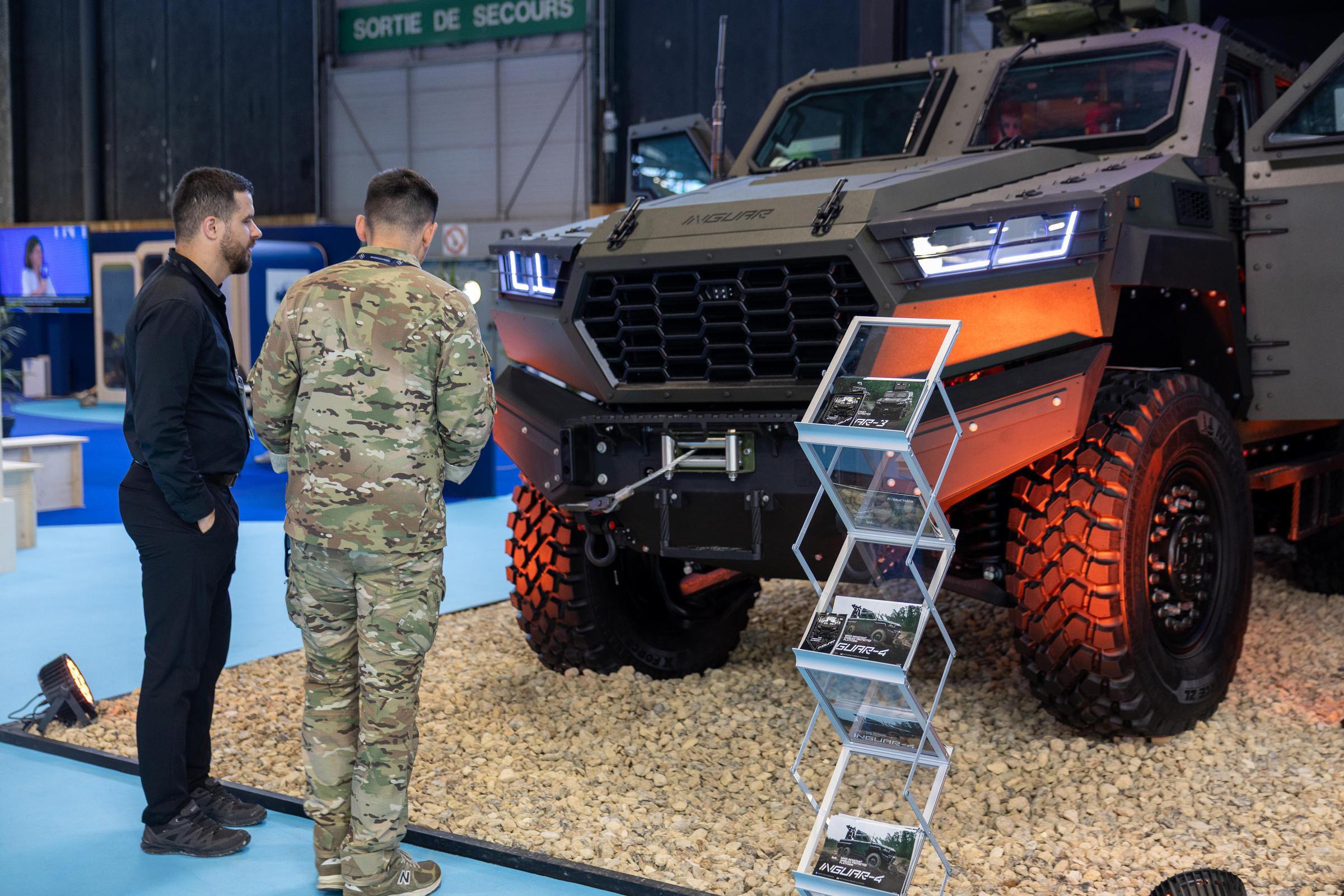
That question is the whole reason XR was sitting at the front of Hall 6. It is also why I will be having a lot of good conversations in France over the rest of the year.
If you were at the show, please get in touch. I would like to hear what you made of it.
-Dorian