XR lets the people around the aircraft get the training reps their jobs demand without the danger those reps carry, but that only counts if you can trace the training to job performance, and job performance to economic value.
Phillip’s talk at the Global XR Summit 2026
Everyone trains the driver. I work with the pit crew.
When people talk about XR in aviation, they usually mean the pilot. My company works on the other side of the flight line: the maintainers, the weapons loaders, the explosive ordnance disposal (EOD) technicians, the ground crews, the carrier deck crews in their colored vests. Think of an F1 pit crew: the car does not win without them, and the jet does not fly without the people around it. These are hands-on, procedural jobs with many steps that are hard to memorize, and real danger in getting even one step wrong.
That danger is front-loaded, and the biggest problems arise within the first 90 days on the job. When an entry-level worker meets the real equipment for the first time, the risk of injury can run as high as 18 times that of an experienced colleague.
The practice paradox
The way anyone gets good at hands-on work is repetition and variety: reps and sets, and, more importantly, varied practice conditions. In these jobs, though, the early reps are the dangerous ones. The practice that would make a new technician safe is the practice most likely to hurt them, so live training rations it.
Our work in the EOD domain began with this exact problem. Air Force Global Strike Command ran a technology prize competition aimed at modernizing live training. We focused on the “Broken Arrow” scenario, a crashed aircraft carrying nuclear weapons. There was one live training site, it cost millions in logistics to get everyone there, and a team might get a few repetitions of a scenario they could memorize. What training value is that? Could it be virtualized, with more reps and more variety? That is what my team built, and we won the challenge.
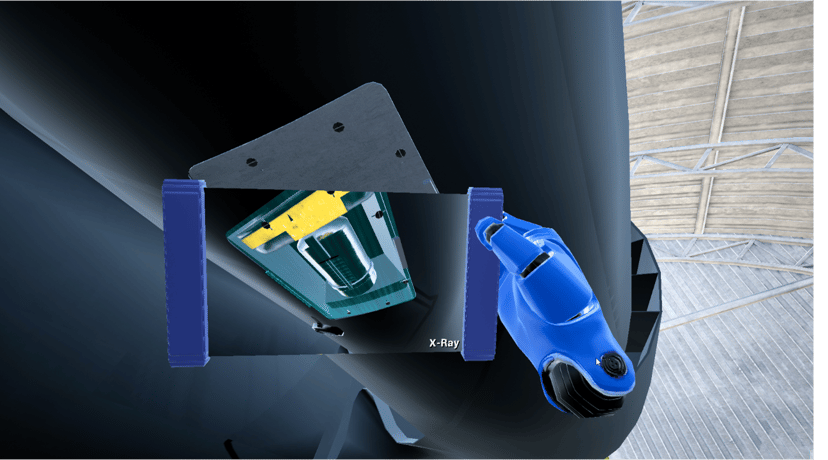
In XR you can isolate the danger, remix the scenario endlessly, and attach a detailed debrief to every rep. A maintainer in a Varjo XR-4 can work inside a virtual aircraft while an instructor offers remote coaching from a laptop. The practice gets safer, cheaper, and more abundant.
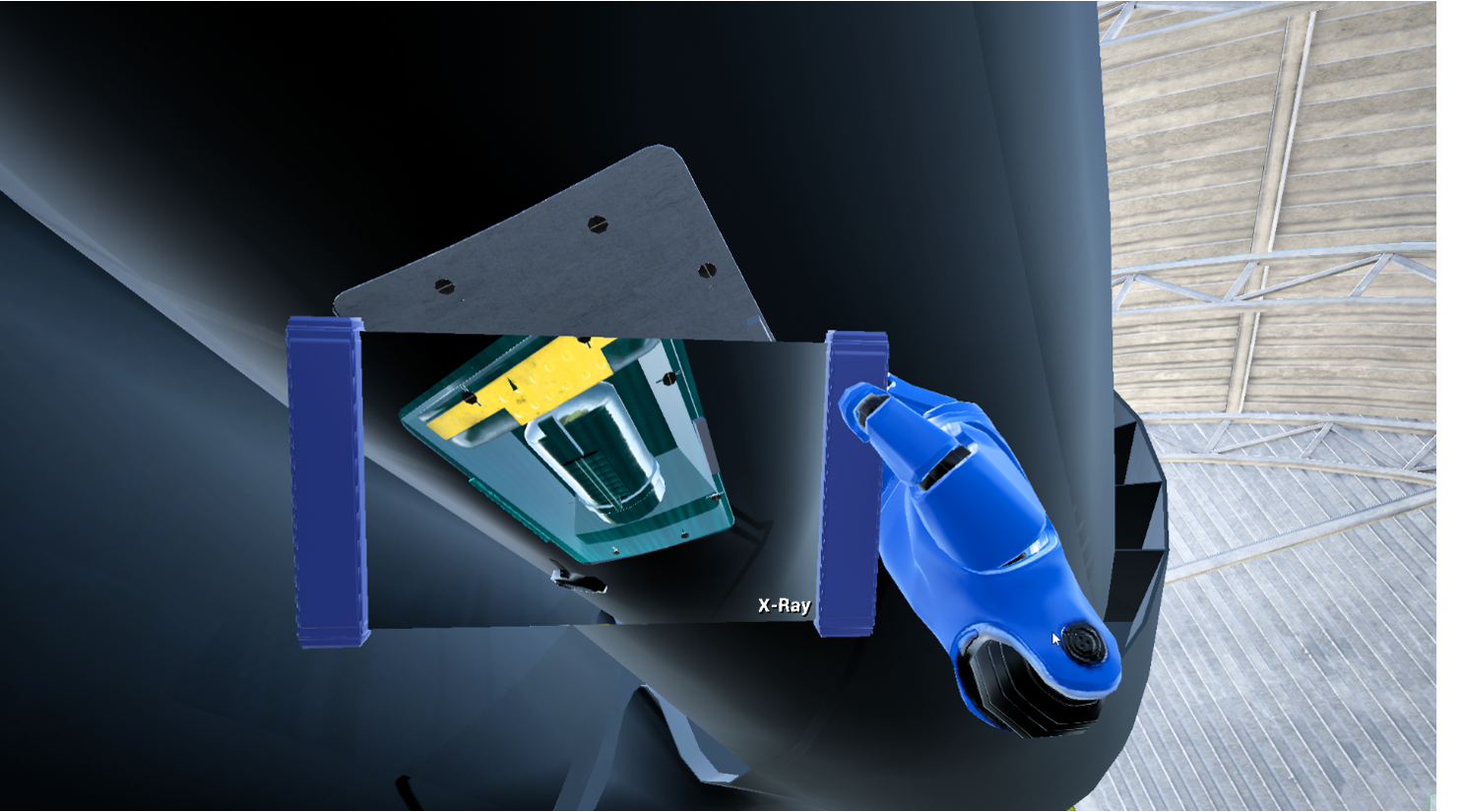
Procedural training for aircraft maintenance in XR
Anyone who has put on a good headset believes that part; the harder part is proving that any of it changed how people do the job.
“It looked great” is not evidence
The cost of doing XR training right means that we, as practitioners, are tasked with proving its value. Someone in your organization will be asked to make the business case, and “the operators loved it” will not carry it.
Does it really work? Is it reducing accidents and injuries? Is it providing real cost savings?
And arguably the most important question: is the XR training program producing a permanent change in people’s job performance?
The idea I keep coming back to, as a human performance professional, is that training’s value can only be demonstrated through an ROI “evidence chain.” Well-designed training produces a real, durable change in a person’s skill. It literally rewires the operator’s neural circuitry, and that change shows up as better job performance, which provides immediate and measurable benefits to both the trainee (better safety, productivity, and efficiency on the job) and the organization (economic value of the enhanced job performance). If any link in that causal chain is missing, the ROI story reduces to mere guesswork.
So we measure every link: performance in training, performance on the job, and the statistical relationship between the two (training validity). How many people go through the system. How complex the job is, because a wider spread between strong and weak performers leaves more room for training to improve someone’s performance. What the job’s output is worth. And how hard you make the final test that defines “training success.”
What the ROI numbers say
For a large military customer we ran this analysis on our aircraft maintenance and EOD systems. Improved job performance alone, before any savings on travel, logistics, or live assets, was projected to be $9–11 million annually, based on 1,000 regular users per year. Across the individual career fields we compared, the range ran from roughly $5.7 million to just under $10 million. Per operator, that is about $14,000 in added annual productivity. An independent government study corroborated the result.
Our results reinforced the finding that a high performer’s annual productivity value can be about 140% of their gross annual salary. So someone paid $100,000 might produce approximately $140,000 worth of job performance productivity. They have produced an additional $40,000 for the organization by performing one delta (one standard deviation) above the average performer. The value proposition of XR training lies in its ability to launch an average performer one delta (or more) higher than their baseline.
Training pays when it moves people up that curve, and only then.
The one lever you control
A critical link in the ROI evidence chain is the training itself. Did the individual master the procedures in the XR environment to the extent they can confidently perform them on the job? To satisfy this link, it’s essential to include a validated training assessment. ROI value counts only for people who pass a final assessment embedded in the training.
If I could hand leadership a single ROI graphic, it would be this one.
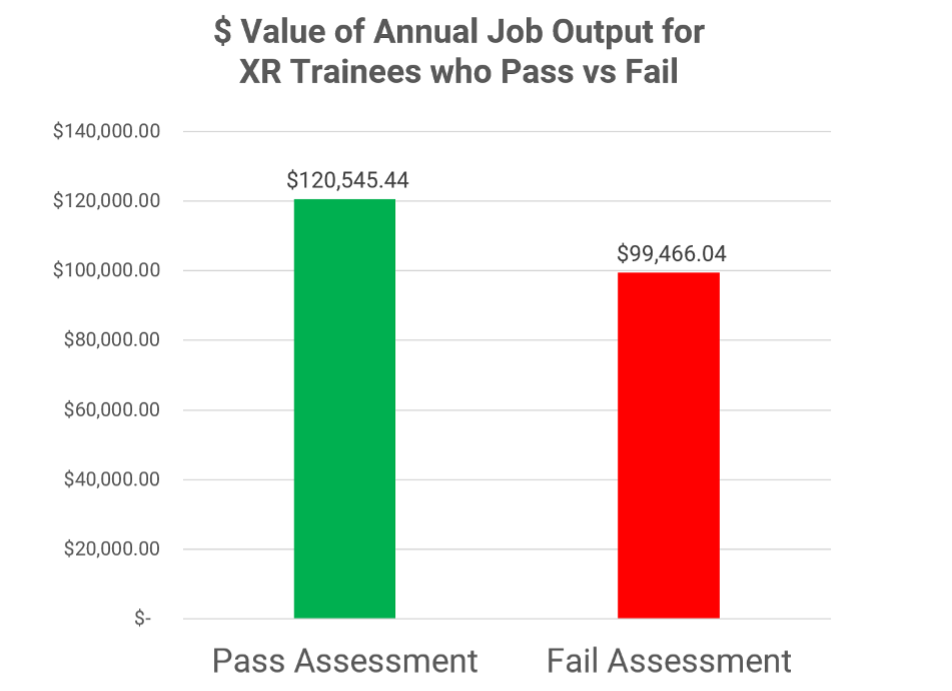
Annual productivity value of operators who passed vs failed a final training assessment
People who passed the assessment had an annual productivity value more than $20,000 higher per person than those who failed. This visual is straightforward to replicate in almost any job, and it highlights the one factor practitioners can fully control: the training success benchmark.
Raise the difficulty of the test, and people need more reps to achieve mastery and pass the threshold. More reps build more durable skill, and more durable skill shows up as a wider gap in the field. A real assessment scores every key competency, replays the performance, and hands the operator a debrief, which is where most of the learning happens anyway.
Build the ROI evidence chain before the first rep
Putting on the headset is the easy part. If you are building an XR program for dangerous work, decide now what effective job performance looks like and how you will measure it. Then measure the training against it and set a passing standard you would defend to leadership. Do that and the ROI story almost writes itself (you still have to analyze the data). Skip it and you are left with “it looked great,” which no one can take into a budget meeting. Everyone I meet in this field wants to keep new technicians from getting hurt in their first 90 days. The measurement is how you find out whether you did.
-Phillip
Phillip M. Mangos, Ph.D., is CEO and Chief Scientist at Adaptive Immersion, which builds XR training for aircraft maintenance, explosive ordnance disposal and other dangerous jobs.