A measurable difference
For KyuCheol Ko, who has taught many pilots, the effect shows up where it matters most, in the cockpit, later.
Customer

Industry
Aviation
Category
Simulated Training
Headset
Varjo XR-4 Series
%20images/XR-4-2026-front-right-1328x680.png?width=1328&height=680&name=XR-4-2026-front-right-1328x680.png)
Software
In-house simulation (KAI)
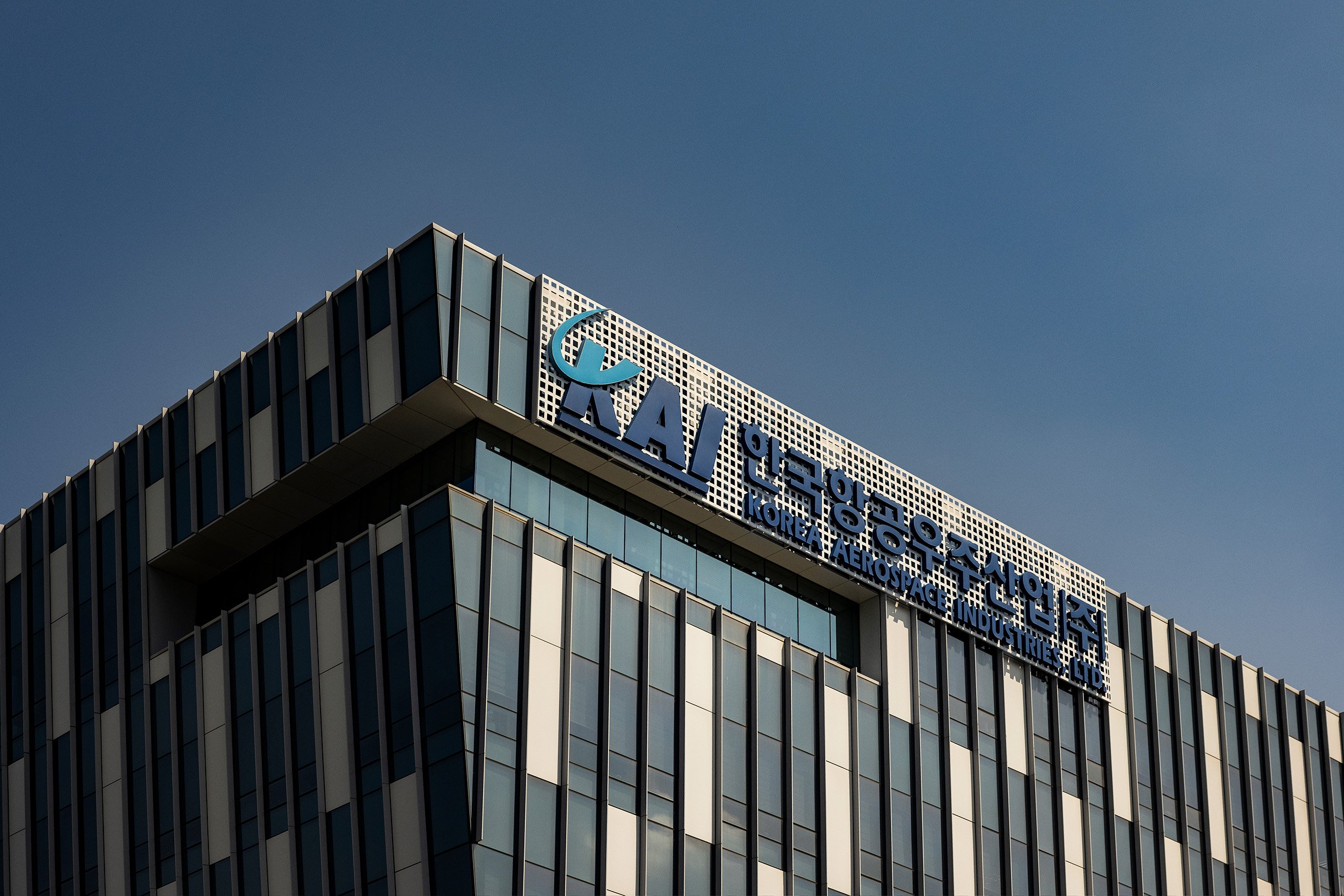
Over the past two decades, Korea Aerospace Industries (KAI), the Republic of Korea’s national aerospace company, has built an indigenous fighter pilot training pipeline almost end to end, and the results have made it one of the most widely exported training systems of its generation.
That pipeline is a ladder. A trainee climbs from basic propeller aircraft through progressively faster and more complex jets, each rung narrowing the gap to a frontline cockpit. KAI builds much of that ladder, from the KT-1 basic turboprop up to the T-50 family of supersonic jets at its higher rungs.
The T-50 Golden Eagle, South Korea’s first indigenous supersonic aircraft, sits at the top: an advanced trainer whose cockpit is deliberately built to feel like the fourth- and fifth-generation fighters students graduate to, from the F-16 and F-15K to the F-35 and Korea’s own KF-21. Its combat-capable siblings, the TA-50 and FA-50, are now operated by air forces across Asia, the Middle East, and Europe.
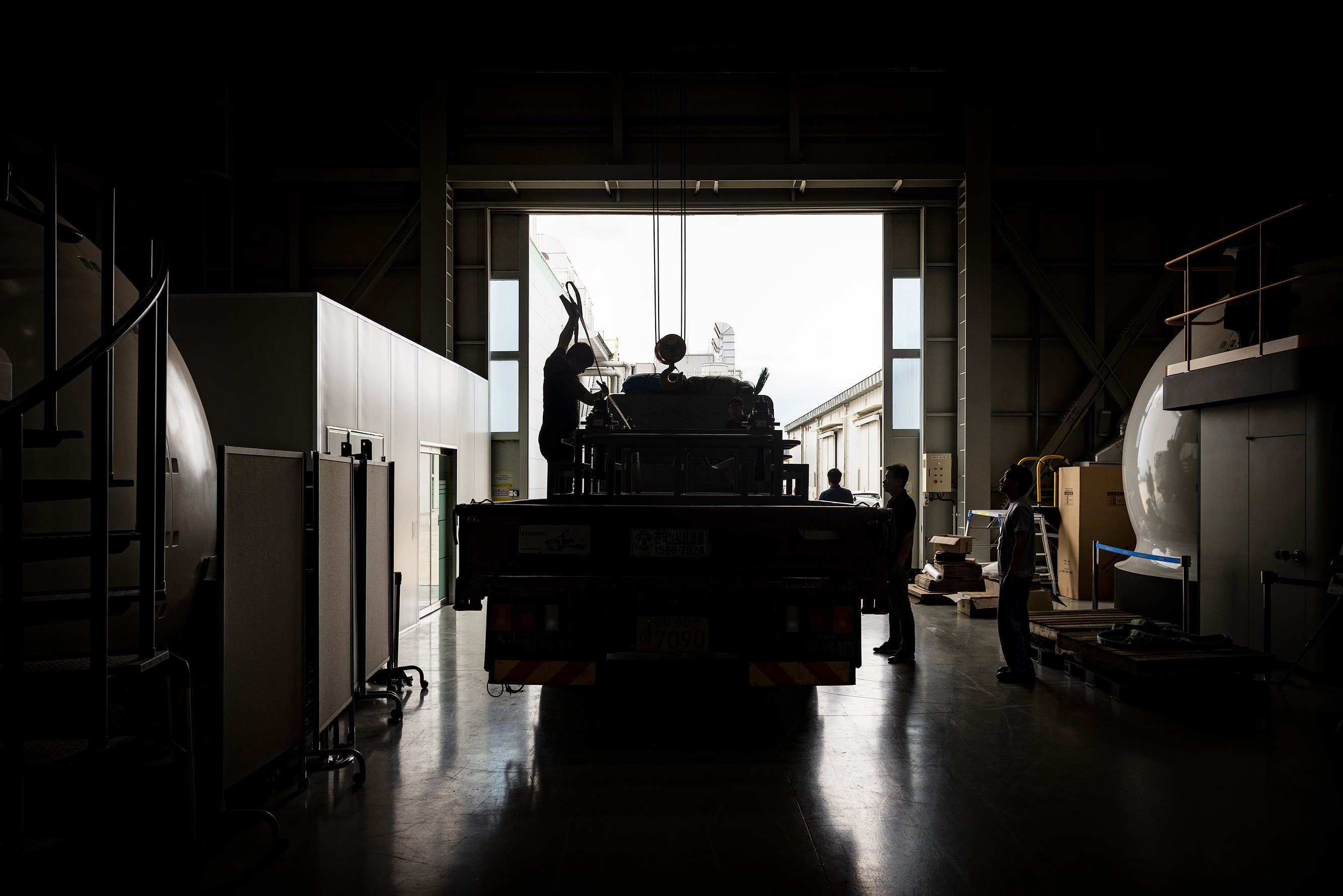
“KAI is the only aircraft manufacturer in our country,” says KyuCheol Ko, a Principal Research Engineer at KAI. “Alongside the aircraft, we also build the simulators, contributing to pilot training and to the development of Korean aviation.”
At KAI’s Sacheon site, a tightly secured complex with an active airstrip where aircraft pass overhead almost constantly, those jets take shape on production lines inside large hangars.
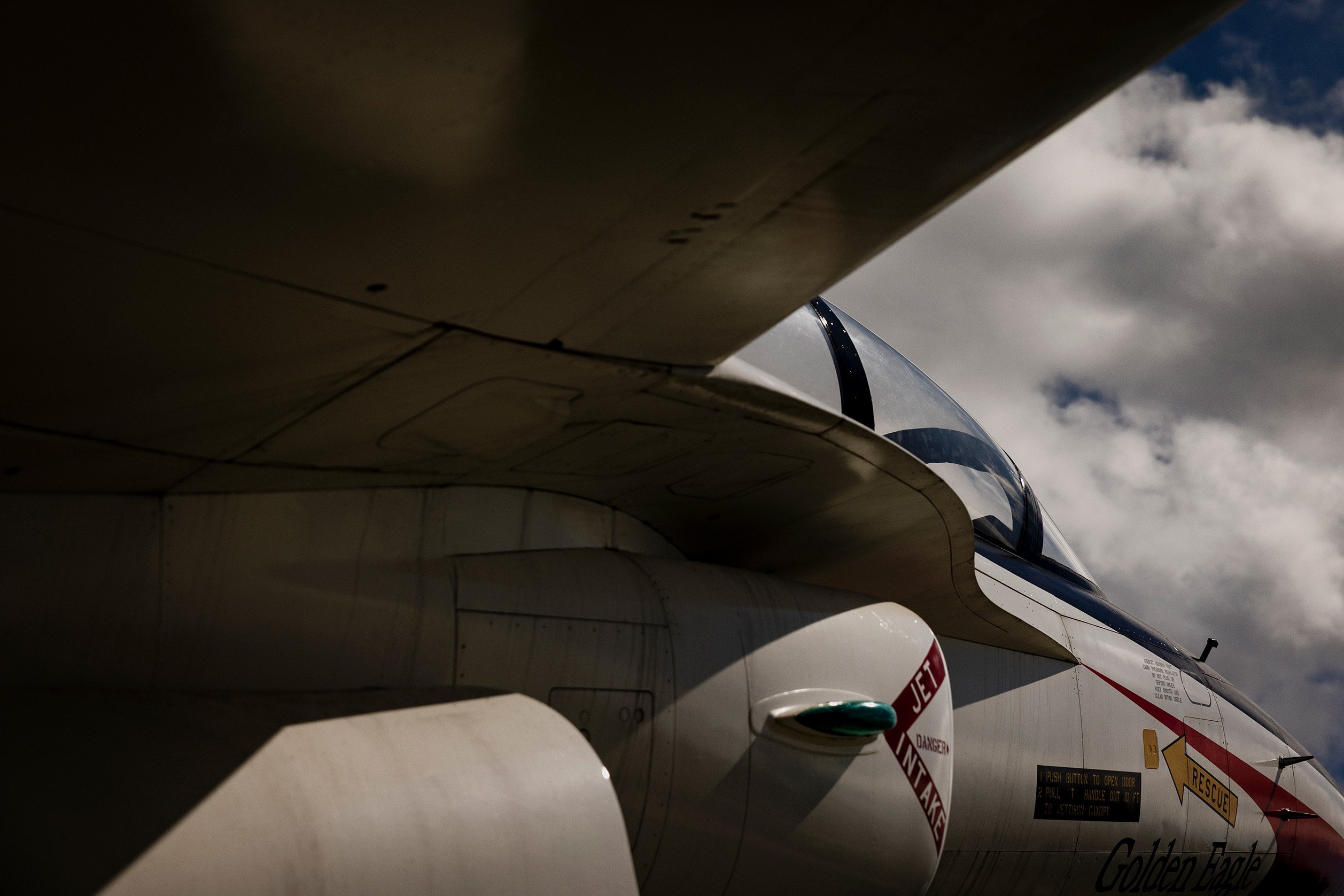
But even a training jet is expensive to fly, and some of what a pilot must learn cannot safely be rehearsed in the air at all. That is where the simulator comes in. For KAI, the simulator is not a separate product bolted on afterward. It is engineered alongside the aircraft.
“The aircraft system, the logistics support system, and the training system were developed simultaneously, and it was delivered to the Korean Air Force in 2005,” says DongHoon Lee, Director and Head of the training-systems research group at KAI.
That combination of the jet and its synthetic counterpart from the same engineering house is visible in the buildings themselves. Alongside the aircraft production lines at Sacheon, a hangar-sized facility is given over to building up simulators for delivery, not only to the ROKAF but to the export customers who operate the aircraft.
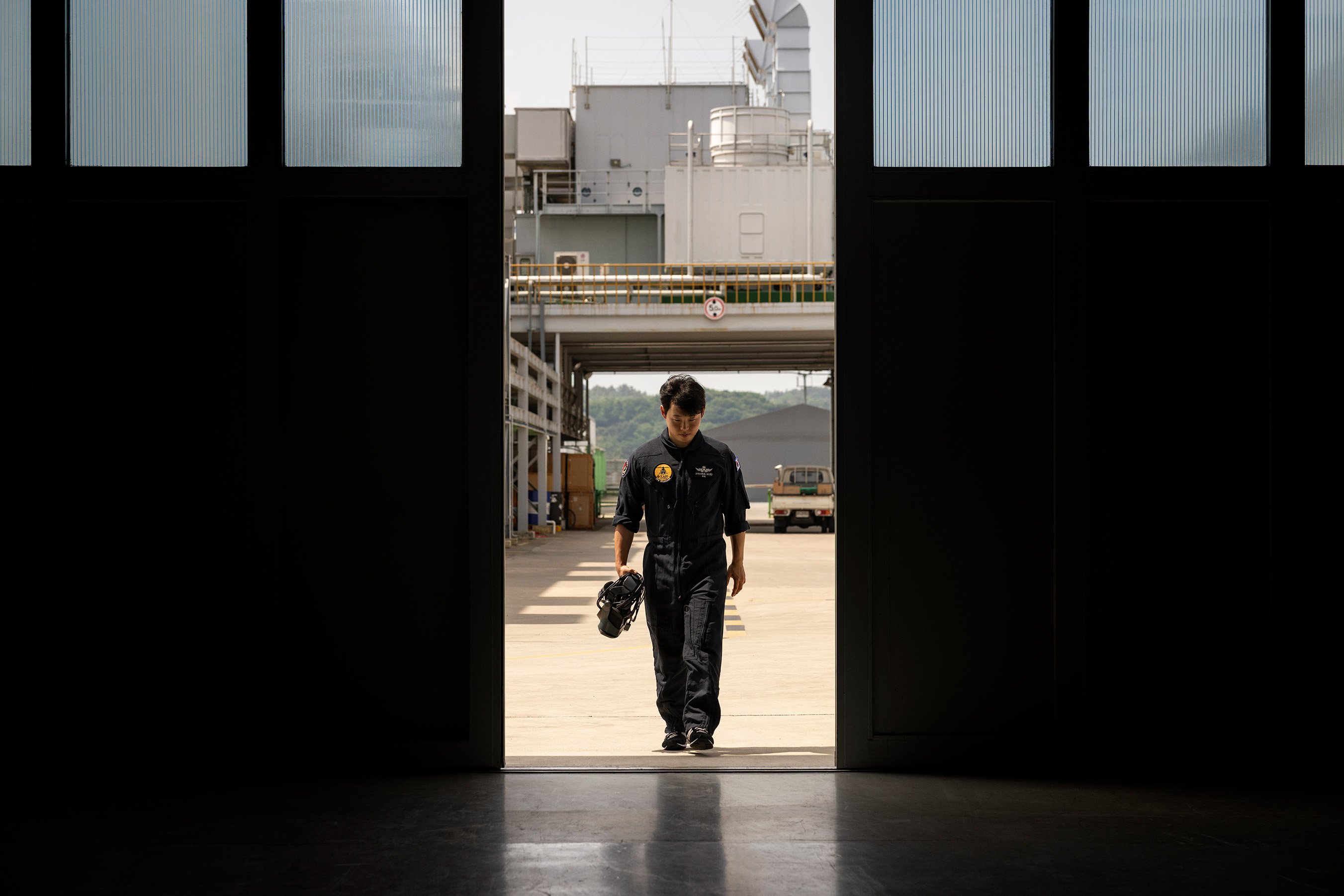
The case for that shift rests on three things. The first is cost. “In terms of budget, simulators cost about one-tenth of actual flight,” says Ko. The second and third are about what a simulator can do that no aircraft can. Some emergencies are simply too dangerous to stage in a real jet, yet they are exactly what a pilot must be ready for.
“In a simulator you can perform various dangerous training tasks that could never be attempted in reality,” Ko says. “You can experience those dangerous moments ten times, a hundred times, and learn how to respond.”
Having flown for three decades before moving into flight-test work, he puts the stakes plainly: “You could say this training saves the pilot’s life.”
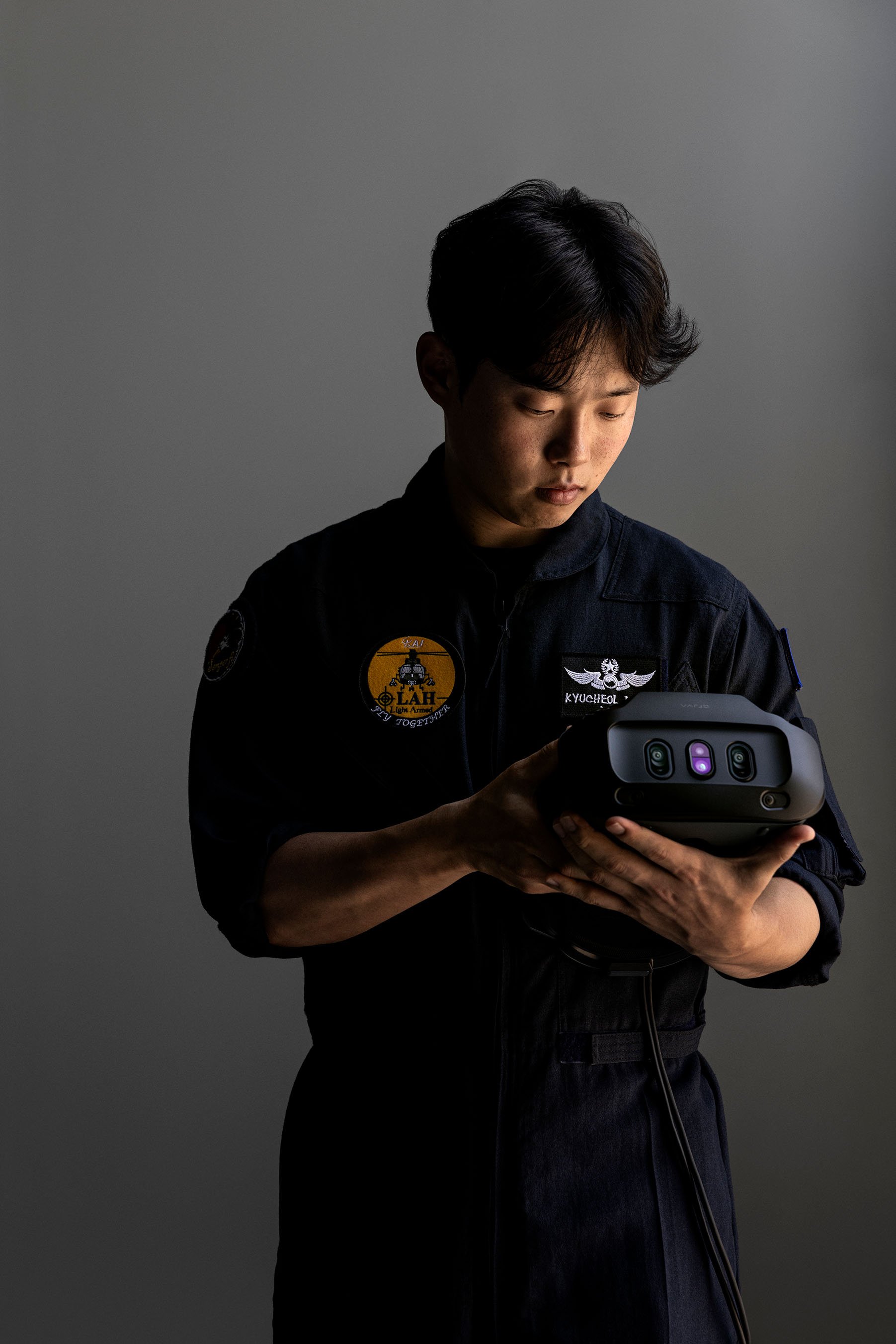
For most of simulation’s history, that realism came at the price of size. A conventional simulator is built around large, fixed display systems that demand a dedicated room, power, and staff. Mixed reality changes the equation. KAI was among the first organizations in Korea to adopt head-mounted displays for simulation, and has stayed with the technology across successive generations of Varjo headsets.
The requirement that drove the choice was uncompromising. A pilot has to be able to read the instruments. “We chose equipment with higher resolution than the various entry-level models,” Lee says, “because a trained pilot sitting in the cockpit needs enough resolution to read the symbols and text on the instruments.”
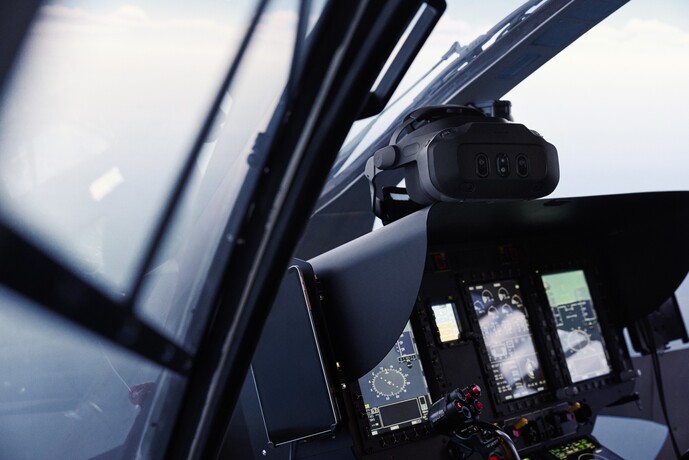
The payoff is footprint. “You can achieve training of equivalent purpose in a much smaller form factor,” Lee explains, “so simulators can be installed close to where pilots work, and used whenever they have free time.” In the training device, the pilot sits in the real, physical cockpit, hands on the actual controls, while the headset blends that cockpit into the virtual world outside.
KAI expects the balance to keep tilting toward the synthetic. “If possible, I think the proportion will increase to fifty-fifty,” says Ko, meaning an even split between simulator and live flying.
The longer-term aim is to close the gap entirely. “As the importance of simulation grows and development continues,” says Lee, “the aim is to integrate live aircraft and simulators ever more precisely into one complete system.”
For the company that builds both the jet and its simulator, that is the reason a system built for one air force now trains pilots for many.
EASA is introducing a new framework for qualifying flight simulation training devices, and it will become applicable in April 2028. This blog translates what it means in practice.
Wärtsilä's Tim Park, a former ship captain, on how mixed reality is helping maritime training catch up with aviation, and what still needs to improve.
Adaptive Immersion CEO Phillip Mangos on proving the ROI of XR training for maintainers and EOD techs, and the one lever practitioners fully control.