
Skip to content
Voice your opinion in the Varjo customer survey
SHARE YOUR FEEDBACK
Varjo
  • Products
    • Hardware
    • XR-4 Series
      XR-4 Series Range
    • Integrated XR System
      Integrated XR System NAV
    • Accessories
      Accessories for Varjo XR-4 Series headsets
    • Book a Live Demo
    • Software
    • Varjo Base
      Varjo Base Nav
    • Teleport Secure
    • Compatible Software
    • Professional Services
    • Varjo Alpha
  • Use Cases
    • Air
      • Civil Aviation
    • Land
    • Sea
    • Other
  • Company
    • About Us
    • Newsroom
    • Jobs
  • Resources
    • Why XR?
    • Book a Live Demo
    • Case Studies
    • Product Book
    • Varjo Insider Blog
    • E-Books and Whitepapers
    • HEAT Starter Kit
  • Support
    • Help Center
    • Contact Support
    • Account Portal
    • System Requirements
  • Talk to sales
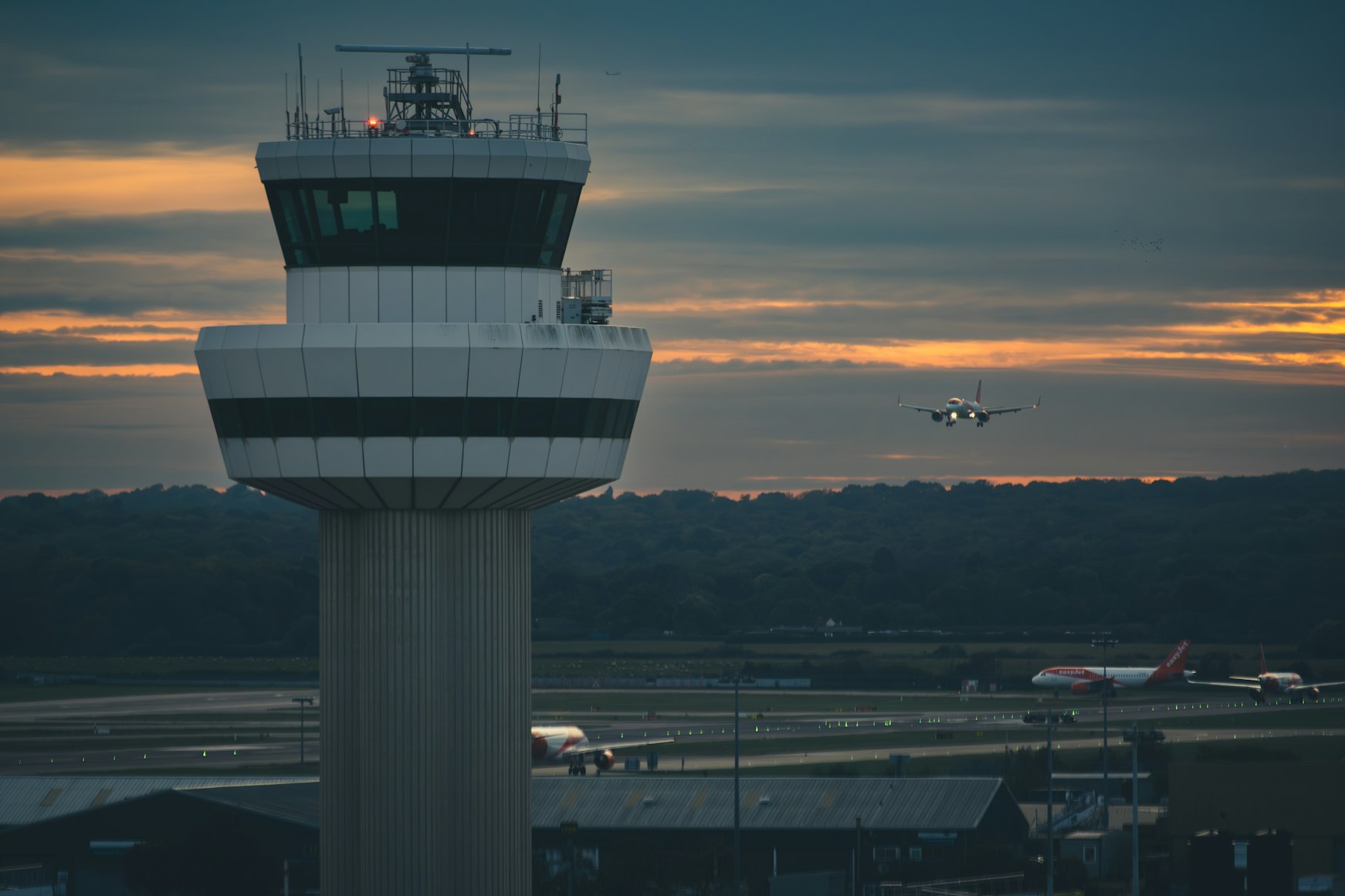
Air traffic control tower

CASE STUDY

World's first regulatory-approved XR air traffic control trainer: Case Fintraffic

 In a role where there is no margin for error, training must be as close to reality as possible. Fintraffic Air Navigation Services is bridging that gap by integrating advanced XR technology into its air traffic controller simulator program, becoming the first organization in the world to do so.  

Customer

Fintraffic_ensisijainen_logo_musta_rgb

Industry

Aviation

Category

Simulated Training

Headset

Varjo XR-4

XR-4-2026-front-right-1328x680

Software

UFA

About customer

Fintraffic is Finland's national provider of traffic control, responsible for safe and efficient management of traffic on land, in the air and at sea. Its Air Navigation Services’ training unit is tasked with maintaining and developing the competence of air traffic controllers. 
 
Air traffic controllers carry one of the most demanding responsibilities in aviation. Controllers are managing multiple aircraft, making rapid decisions under pressure, and upholding several communication streams in an environment where a single error can have severe consequences. 

The safety of people on board every aircraft and ground vehicle in a controller's sector depends on their judgement, situational awareness, and ability to perform under stress. Because the stakes are so high, training for each controller must be extensive, realistic, and held to the strictest regulatory standards. 


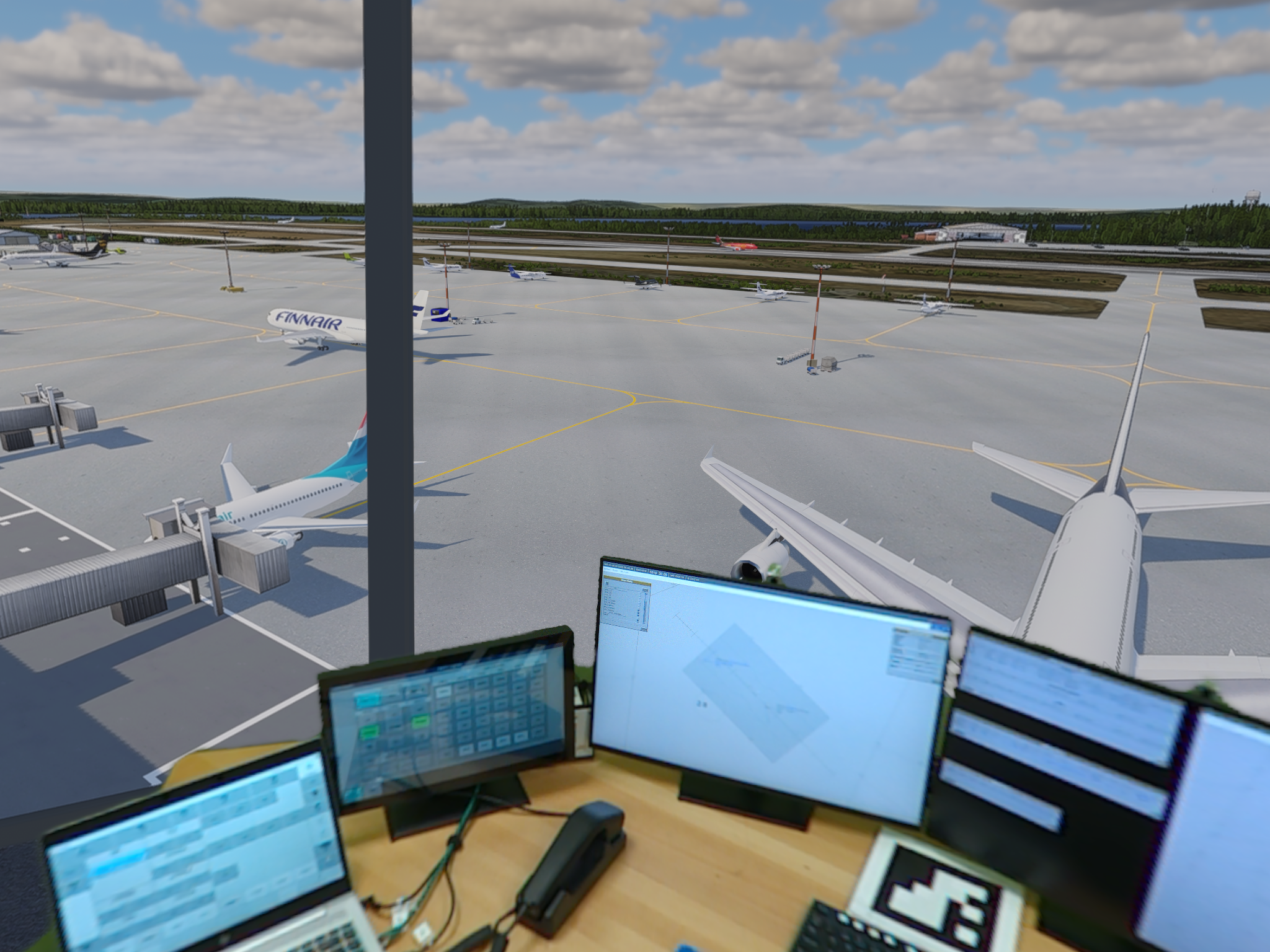
Fintraffic VR simulation
Image: Fintraffic

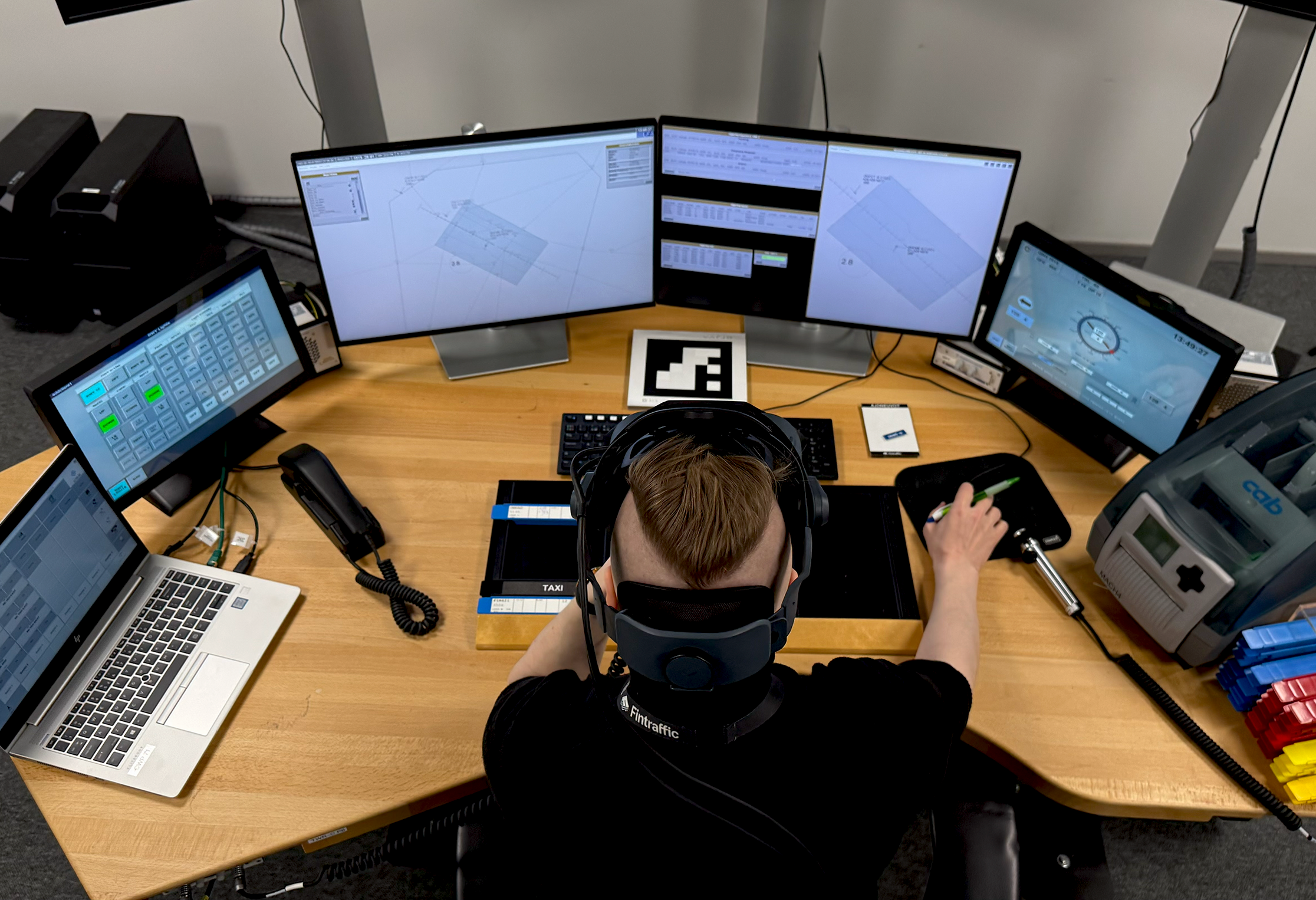
The need for 360-degrees

Traditionally air traffic controller tower training takes place in a simulator room, where the view from the ATC tower is presented on screens or projected onto walls by projectors. Depending on the objectives and the training phase, the view can be presented from a few screens to a full 360-degrees view. When the volume of traffic in training increases and becomes more diverse, the need for a view that is as realistic and expansive as possible also increases.

Traditional 360-degree installations using multiple screens or projectors require substantial space and hardware. Finding a way to maintain expansive visual fidelity while reducing the physical footprint therefore became a key objective for the Fintraffic team.

“Our goal was to find a space- and cost-efficient solution where the quality remains at least the same, if not even improved,” explains Teemu Erkkilä, ATC simulators project lead at Fintraffic Air Navigation Services. “The possibilities offered by Varjo’s XR for data collection and analysis – especially in eye tracking – were also one of the drivers for launching the XR project.”  

VR air traffic control
Image: Fintraffic

From development project to global milestone

Throughout 2026, Fintraffic's training unit has been running a development project to explore how XR technology can be effectively integrated into air traffic controller training, and what benefits it can bring. The project is a three-way collaboration between Fintraffic, simulation provider UFA, and Varjo.

"As industry-first adopters, we wanted Varjo's experts involved in the project to bring their specialist knowledge in XR technology and its use in training. Varjo's enthusiasm for this new territory was high from the outset, and it was easy to move the project forward with them," Erkkilä says.

Rather than building new software from scratch, the team worked with UFA's existing XR application for air traffic controller training. The main goal of the project was to understand the system’s impact on training events and to identify the best ways to use XR in this field.

The work quickly bore fruit: The XR application has already been incorporated into regulatory-approved documentation. On 1 April 2026, Fintraffic Air Navigation Services became the first organization in the world to deliver regulatory-approved air traffic controller training using XR headsets, as part of their Helsinki-Vantaa unit training. 

Video: Fintraffic

Stepping into the control tower 

Using a wide range of equipment and systems at the controller workstation is a core part of tower controller operations, and the same is true in training. The ability to interact with real physical devices plays a critical role in creating effective training experiences, especially as they grow more complex.

The mixed reality solution is designed with this in mind, blending real and virtual worlds together. In practice, this means that a trainee wearing the headset can see the physical workstation and all its equipment in front of them exactly as normal, while the surrounding environment is replaced by a photorealistic virtual view of from the air traffic control tower.  

An alternative configuration takes a green-screen approach: curtains are hung on the walls of the simulator room, and the Varjo headset replaces that green background with a virtual tower environment, while all people, devices, and furniture in the room remain fully visible. In both cases, trainees interact with real equipment in a convincingly realistic operational context, without the cost or footprint of a traditional full-scale simulator environment.

The XR approach can reduce space by up to 75% and costs by up to 60% compared to a traditional simulator, while delivering the same level of training effectiveness. 


VR air traffic control

IMAGE: FINTRAFFIC

Keeping the instructor in the loop 

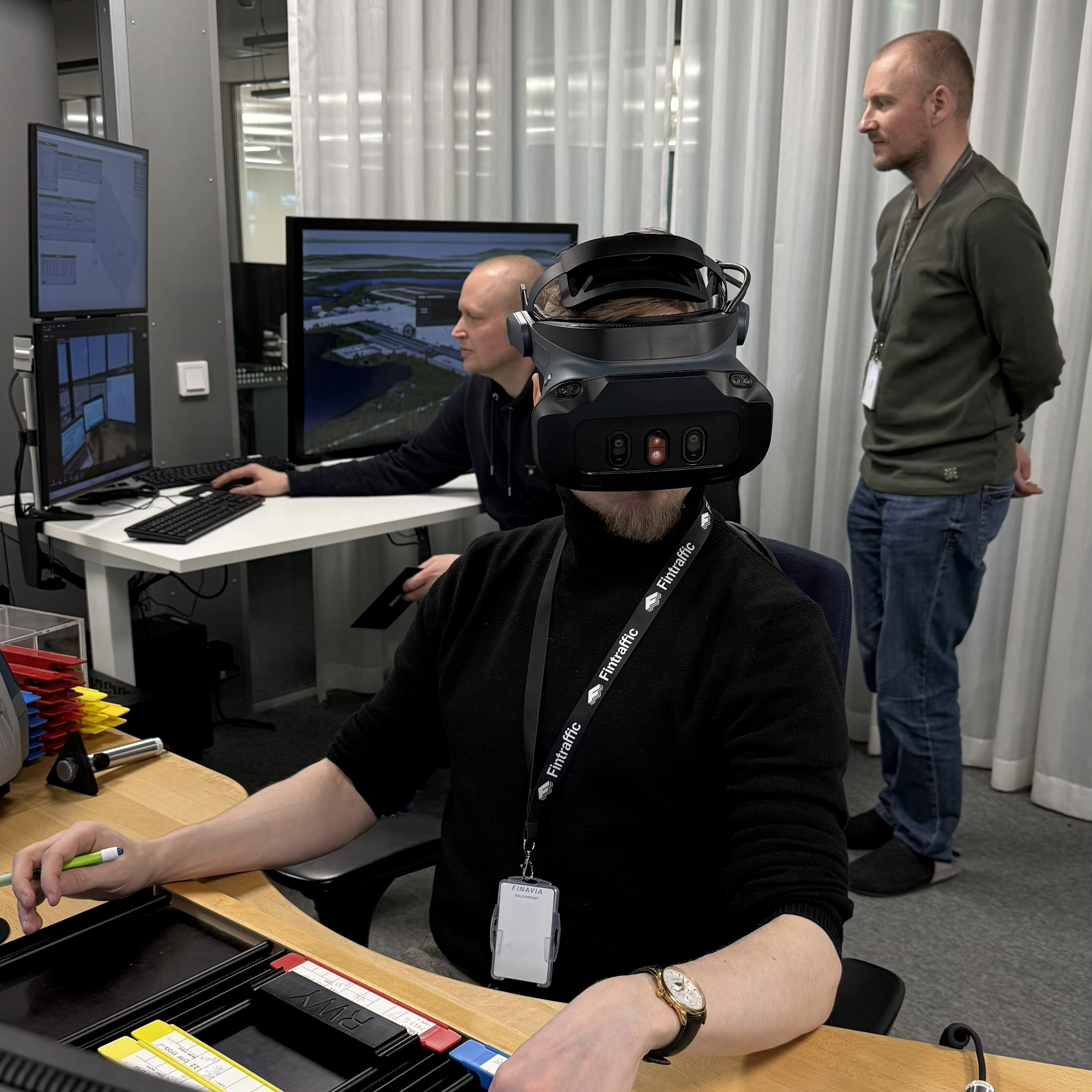
In a traditional tower simulator, student and instructor share the same room and the same view, projected onto screens or walls around them. With XR, that shared visual environment disappears: the tower view exists only inside the student's headset, which fundamentally changes the dynamic between instructor and trainee. To address this, UFA's ATLIVE application was brought into the setup alongside the ATXR simulation software.

Through ATLIVE, instructors can follow both air and ground traffic on a dedicated screen with full situational awareness, maintaining their ability to monitor, intervene, and guide effectively even without sharing the student's view. “By combining UFA’s ATXR and ATLIVE applications with the Varjo headset we were able to achieve the goals of the project. The student and instructor experience remained the same or in many cases improved, while reducing costs and space requirements of tower simulation,” Erkkilä says.

The case for XR keeps growing

The early results have given Fintraffic strong confidence in the technology's potential. Beyond training realism, XR opens up significant practical advantages such as the ability to rapidly scale simulator capacity using a space-efficient setup.  “XR offers new and highly cost-effective options in our hardware acquisitions if current simulators built with multiple video projectors and computers can be replaced by XR headsets,” says Erkkilä.

With Varjo's systems and UFA's application both developing rapidly, Fintraffic intends to stay at the forefront helping to shape the future of XR in air traffic controller training worldwide. “The XR application has been in use with us for just over four months now, and in that time we have already gained a good understanding of the possibilities this new technology offers,” Erkkilä notes. “Research continues and there is still much to learn, but the direction is very promising."

"We have strong confidence in the potential of XR technology for air traffic controller training, and it opens entirely new possibilities.” Teemu Erkkilä, ATC simulators project lead at Fintraffic Air Navigation Services

More articles

All articles

Training and Simulation / June 29, 2026

Eurosatory 2026: Everything still has to be trained on

Varjo's Dorian Frayssinet on the biggest Eurosatory yet: a flawless show, an industry investing hard, and why all that new hardware comes back to training.

Training and Simulation / June 25, 2026

DSET 2026: what a $55 drone tells you about training

Varjo's Nick Williams reports from DSET '26 in Cheltenham: a $55 battlefield drone, the training problem it exposes, and why only XR can solve it at scale.

May 20, 2026

Why Counter-Drone Simulation Can't Wait

Juny, a Ukrainian Special Forces combat veteran explains why counter-drone training can't wait — and how XR simulation is closing the gap.

All articles

Ready to redefine reality?

Talk to sales

varjo-logo-white
  • Company
    • About Us
    • News
    • Blog
    • Media
    • Jobs
    • Case Studies
    • Legal
    • AI Information
  • Products
    • Varjo XR-4 Series
    • Varjo XR-4 Secure Edition
    • Accessories
    • Varjo Base
    • Professional Services
    • Teleport by Varjo
    • Teleport Secure
  • Support
    • Help Center
    • System Requirements
    • Compatible Software
    • Find a Reseller
    • Setup Guide
    • Developers
  • Varjo account login
    Subscribe to newsletter
  • LinkedIn
  • YouTube
  • Instagram
  • Facebook
  • X
  • Cookie policy