
Skip to content
Voice your opinion in the Varjo customer survey
SHARE YOUR FEEDBACK
Varjo
  • Products
    • Hardware
    • XR-4 Series
      XR-4 Series Range
    • Integrated XR System
      Integrated XR System NAV
    • Accessories
      Accessories for Varjo XR-4 Series headsets
    • Book a Live Demo
    • Software
    • Varjo Base
      Varjo Base Nav
    • Teleport Secure
    • Compatible Software
    • Professional Services
    • Varjo Alpha
  • Use Cases
    • Air
      • Civil Aviation
    • Land
    • Sea
    • Other
  • Company
    • About Us
    • Newsroom
    • Jobs
  • Resources
    • Why XR?
    • Book a Live Demo
    • Case Studies
    • Product Book
    • Varjo Insider Blog
    • E-Books and Whitepapers
    • HEAT Starter Kit
  • Support
    • Help Center
    • Contact Support
    • Account Portal
    • System Requirements
  • Talk to sales
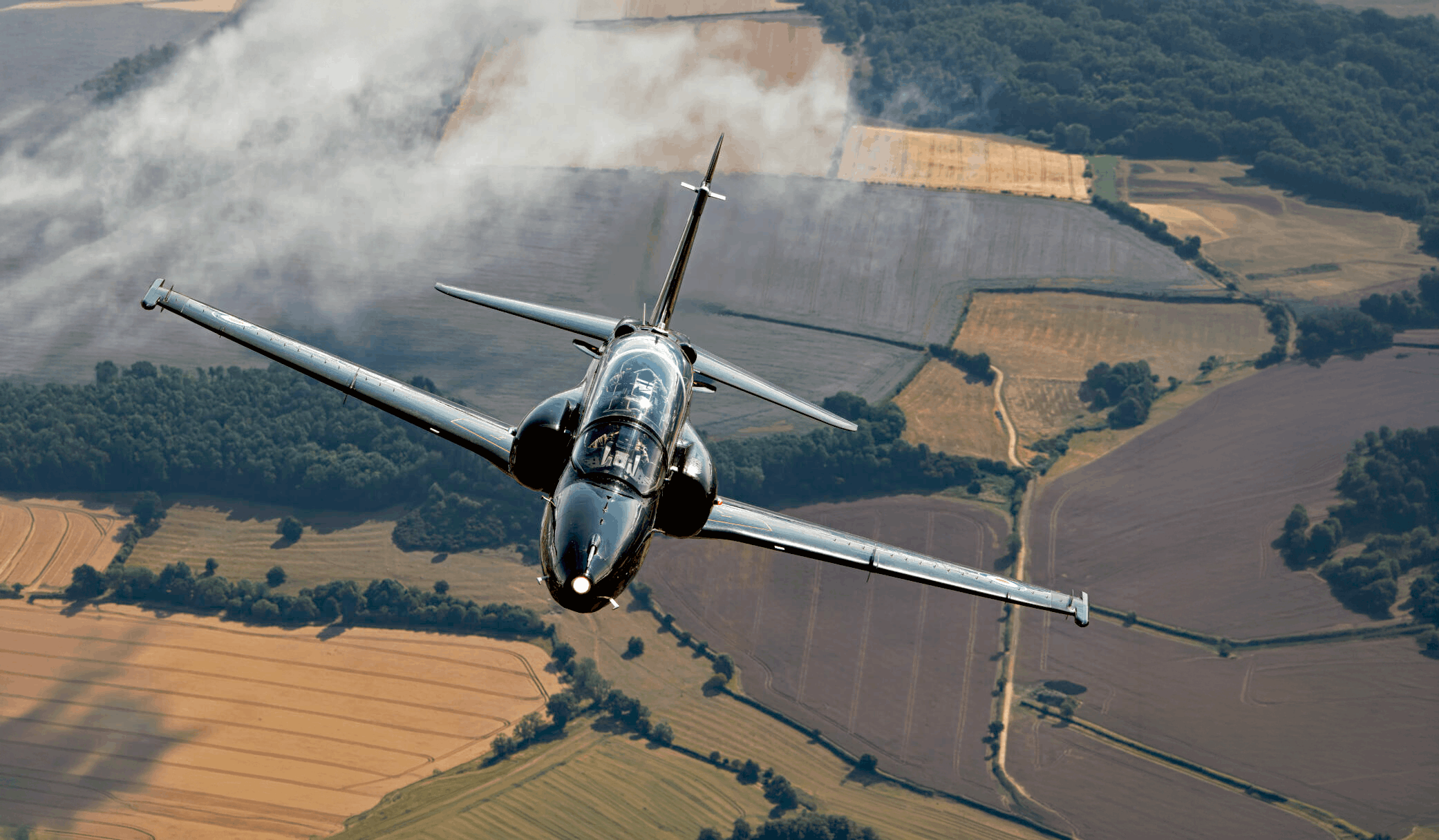
Hawk aircraft

case study

How Mixed Reality Is Enhancing Fast Jet Pilot Training for the UK’s Royal Air Force and Royal Navy

Future Royal Air Force and Royal Navy fast jet pilots are stepping into a new era of training at RAF Valley in North Wales, with advanced mixed reality simulator systems for the Hawk T2 and Texan aircraft.

Customer

raf-logo-blue-d3dd4e6f6e

Industry

Defense

Category

Simulated Training

Headset

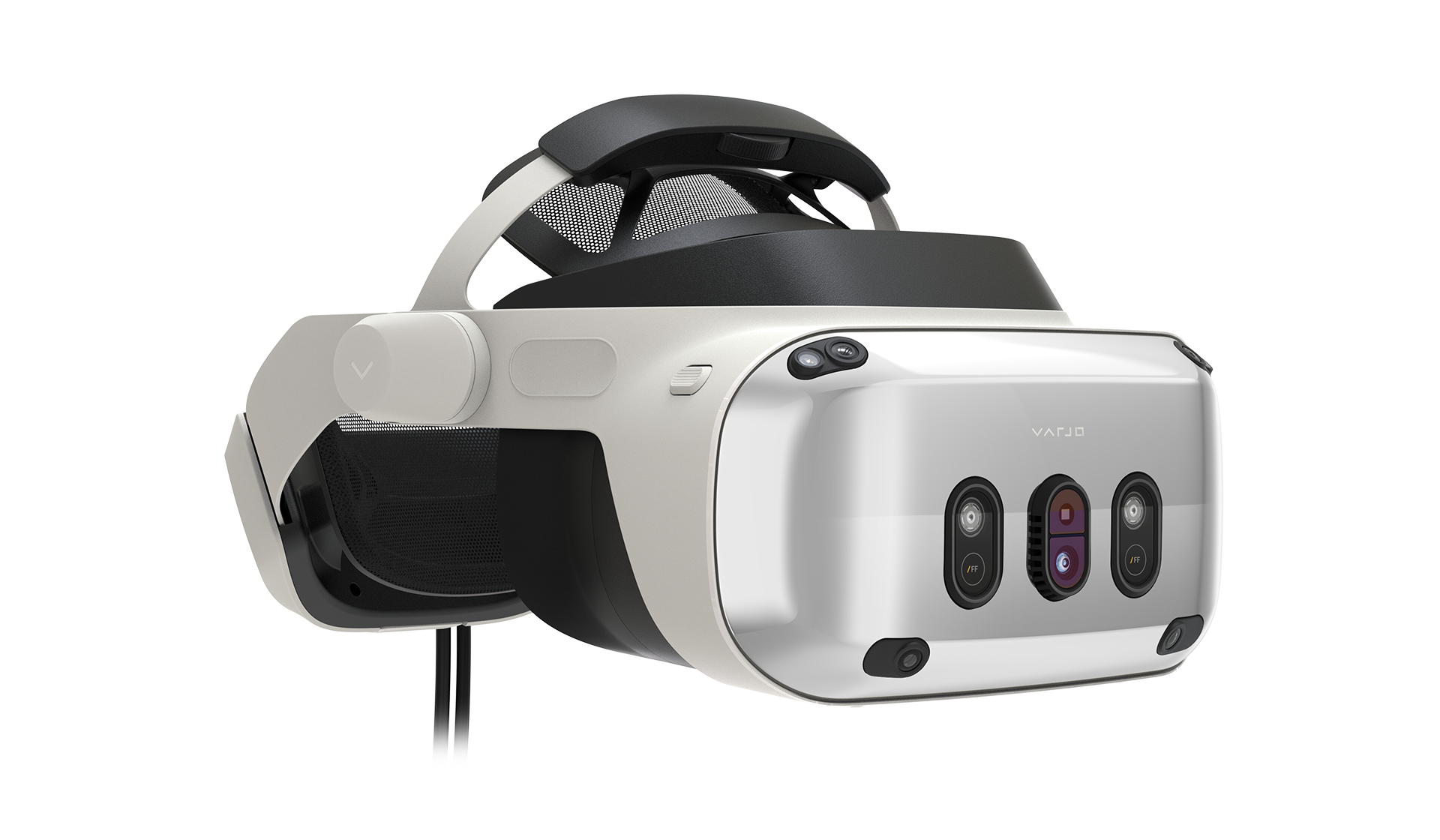
Varjo XR-4

varjo-example-product

Software

Lockheed Martin

About 

The Royal Air Force (RAF) is the UK’s air and space force and a core component of the UK Armed Forces. As one of the world’s oldest independent air forces, the RAF delivers combat air power, intelligence, surveillance, reconnaissance, mobility, air defense, and operational support across the air, space, and cyber domains.

The Royal Navy’s fast jet aviation capability, delivered through the globally deployable carrier strike group, allows Royal Navy and RAF personnel to project air power worldwide, through a flexible and expeditionary force.

The RAF and Royal Navy make a critical contribution to UK national defense, NATO commitments, and international security operations by maintaining operational readiness, deterring the UK’s adversaries, and projecting force globally.

Military pilot training in the UK is conducted within the UK Military Flying Training System (UKMFTS): a collaborative partnership between the UK Armed Forces, National Armaments Director Group and Industry, led by Ascent Flight Training.

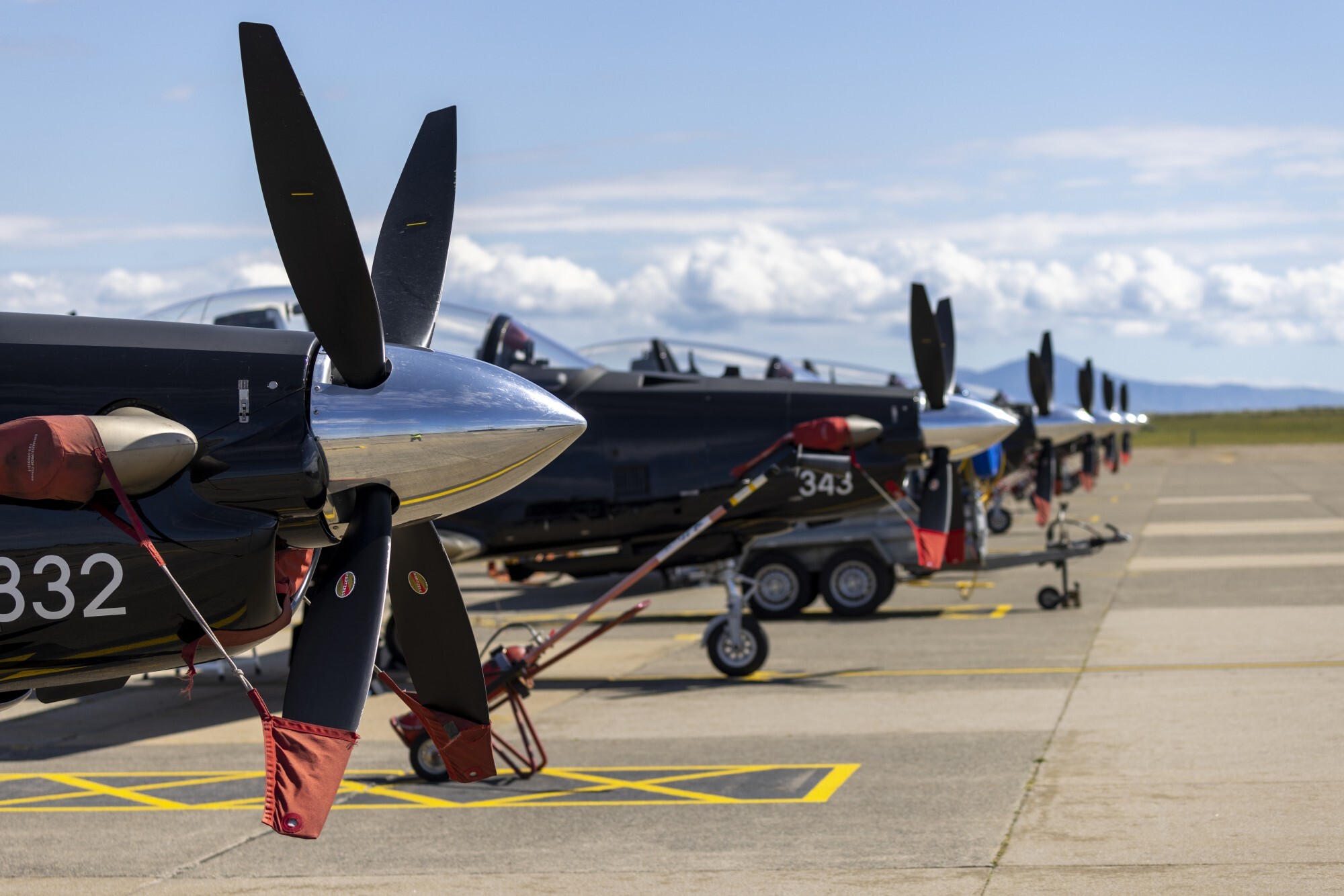
A key part of the system is Number 4 Flying Training School at RAF Valley, located on Anglesey in North Wales. RAF Valley is central to the UK fast jet pilot training pipeline, delivering both basic and advanced fast jet training for the RAF and Royal Navy. The location provides access to a demanding and varied flying environment, including coastal, mountainous, and low-level operating areas, helping prepare trainee pilots for the complexity of frontline aviation.

RAF Valley aircraft
Image: Ascent Flight Training

Enhancements to the training environment

The UK’s pilot training system is experiencing healthy demand for more fast jet pilots and modernized training, all while operating within well-defined resource availability boundaries. "We produce pilots that are trained to a very high standard – the complexity of what they are expected to deal with is pretty significant," says Richard Saunders, former RAF pilot, flying instructor, and program lead at Ascent Flight Training.

“This served as the catalyst for a broader period of research and development to examine the potential of emerging technologies in this context. The aim was to create training that was more efficient, enabling us to make better use of the resources at our disposal, and to enhance the quality of the trainee’s learning environment.”

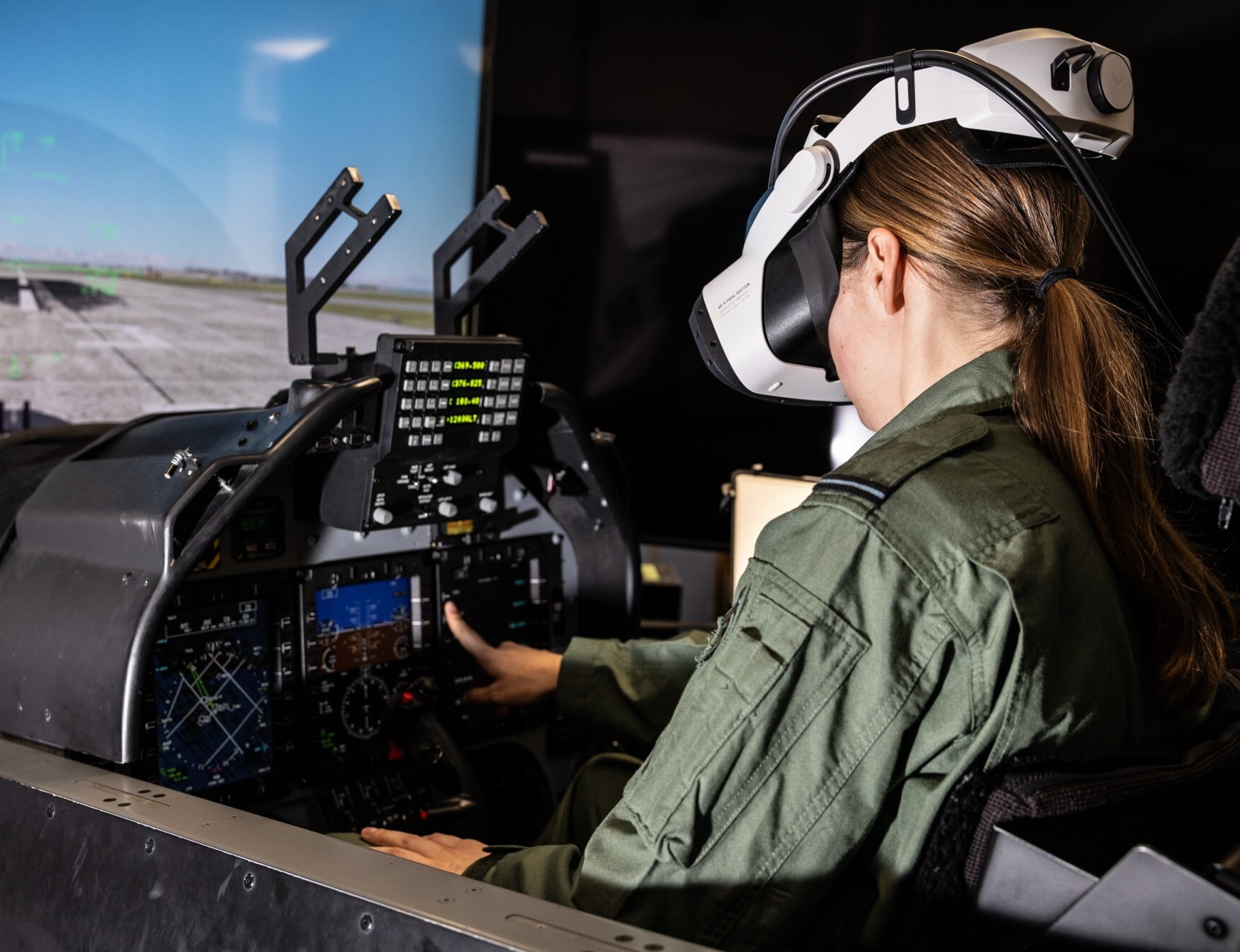
Royal Air Force VR training
Image: Crown Copyright

Building the Fast Jet Transformation Program

Within UKMFTS, a Fast Jet Transformation Program was recently established, bringing together RAF fast jet instructors and specialists, UK MOD project experts, Ascent Flight Training as program lead/integrator, and Lockheed Martin as the ground-based training equipment specialist supplier.

Rather than following a traditional defense procurement model built around rigid milestones and fixed requirements, the team adopted a far more agile and collaborative approach designed to accelerate the delivery of results and continuously evolve solutions in step with technology capability development. By involving end users from the earliest stages of development, they were able to rapidly iterate new capabilities, incorporating instructor feedback in almost real time.

The result was a significant upgrade to 11 training devices across RAF Valley, covering both the Texan aircraft used for basic fast jet training and the Hawk T2 used for advanced jet training. 


Built for the real-life flight 

The new headset-based flight training devices support a range of training tasks: circuit practice, formation flying, and low-level navigation, with the ability to change runways, add weather effects, and move to unfamiliar airfields to progressively stretch the trainee's capability. Multiple devices can be linked to place several trainees in the same synthetic environment simultaneously, creating the kind of operational friction they will encounter in live flying.

“The RAF Valley environment is diverse and therefore quite challenging for the trainees in several respects. It is helpful for us to be able to give them exposure to that in the synthetic environment,” Saunders notes.

Mixed reality at the core

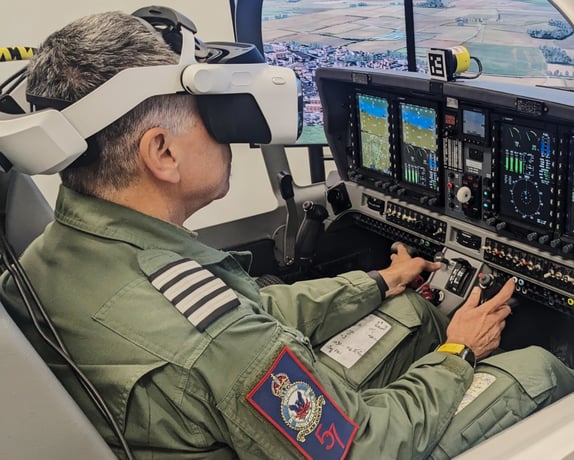
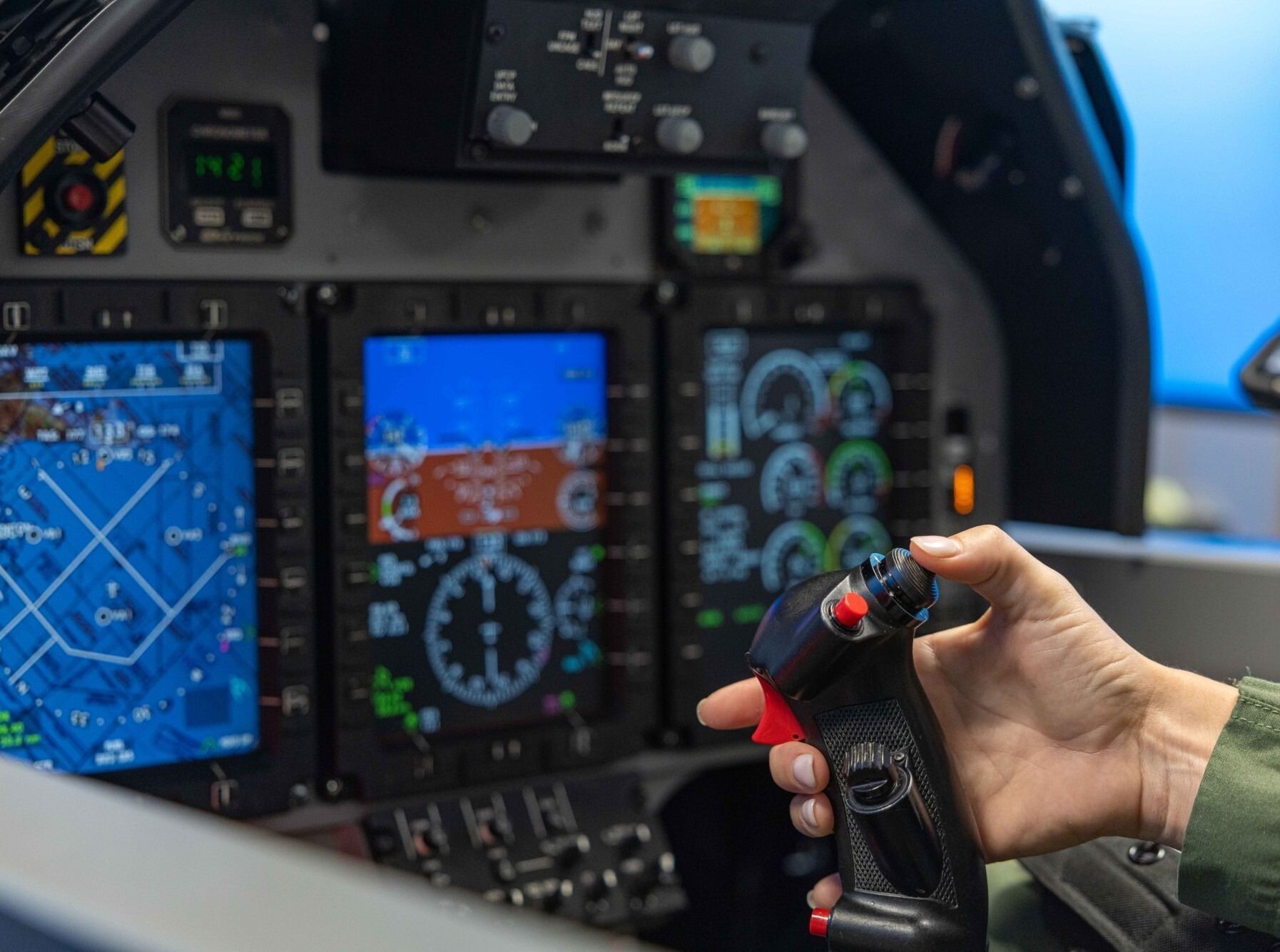
In the new training devices, the mixed reality capability sits at the heart of the simulation. A trainee pilot sits in a real physical cockpit, able to interact with the controls, switches, and instruments exactly as they would in the aircraft, while wearing the headset and seeing a seamlessly blended view of the virtual world outside.

"The ability to interact physically with the cockpit was a consistent feedback point and key requirement from experienced aircrew," says Saunders.

In addition to the headset integration, the new training devices also received a range of other improvements, including updates to the simulation models, higher fidelity visual databases, force-feedback controls, and instructor operating stations capable of displaying real-time trainee eye tracking data.
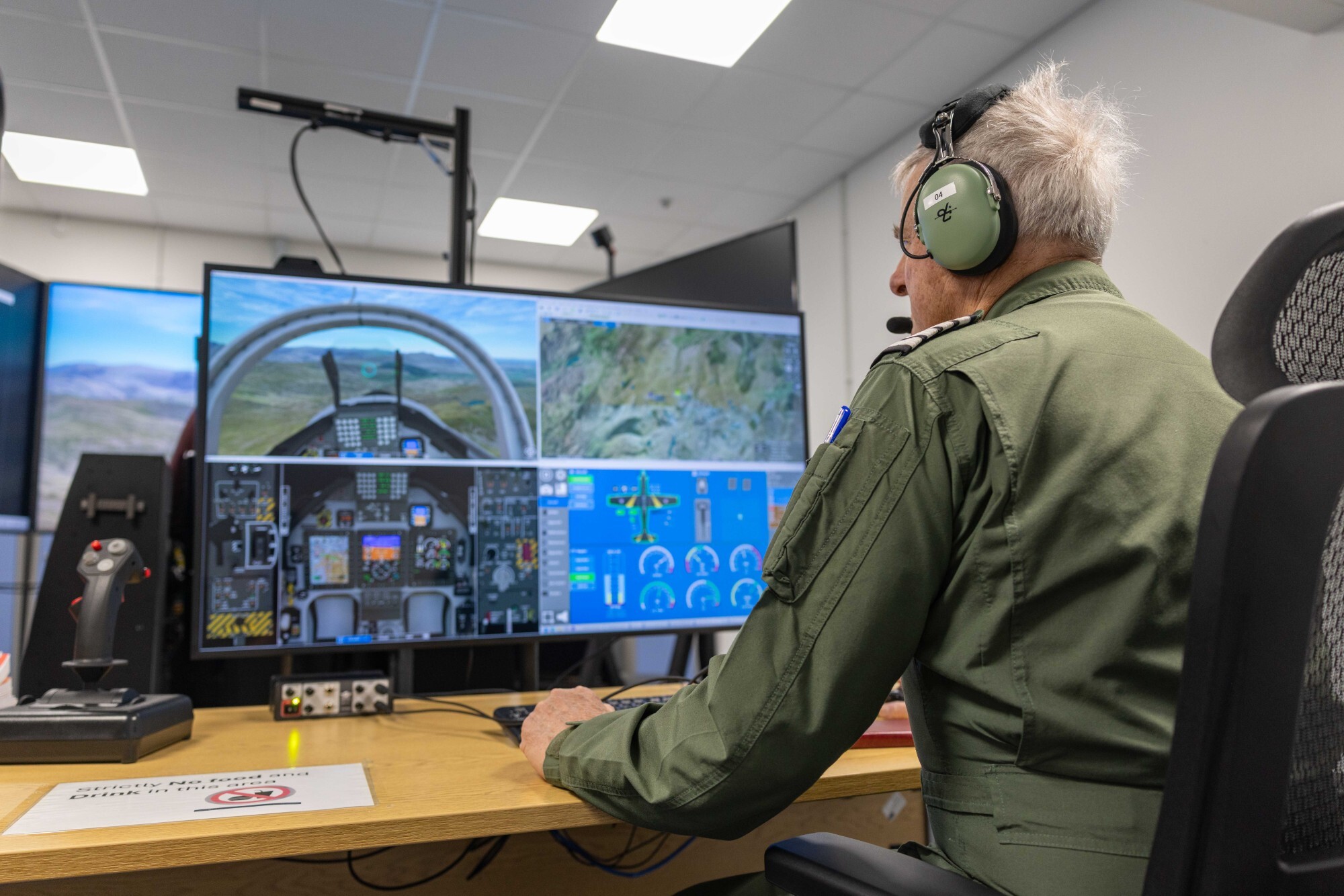
 

"When I am talking to colleagues, I describe the mixed reality solution as the best of both worlds." Richard Saunders, former RAF pilot, flying instructor, and program lead at Ascent Flight Training
XR training system

 Image: Crown Copyright

A new window into trainee performance

Varjo headsets’ built-in eye tracking has added an entirely new dimension to instructor capability. From the operating station, instructors can see exactly where a student's gaze is directed in real time. This allows the instructor to quickly establish whether their scan pattern is appropriate or whether a high-pressure scenario is causing them to rush or miss elements of their visual work cycle.

"That information had not really been available to us previously," says Saunders. "We can tell an awful lot about a trainee's performance just from their eye movement and scan strategy."

Looking ahead, the program is expected to place even greater emphasis on data-driven insights gathered from synthetic training.

"The data aspect is going to be much, much more important than it has been in the past. We have a wealth of data available from our synthetic training devices which could now be exploited more effectively to give us meaningful insights into performance," Saunders explains.


Cockpit

 Image: Crown Copyright

Training between the sorties and a growing library of lessons

The most immediate benefit from upgrading the training devices has been to permit trainee access to the devices to support their pre-flight preparation and post-flight consolidation. Trainee pilots can use the system independently before live flights to rehearse bite-sized training scenarios focused on specific areas for improvement or instructor feedback. This helps them arrive better prepared for their syllabus events and allows greater value to be extracted from their live flying hours.

After flights, the same systems allow trainees to revisit and consolidate key skills, which helps to address potential skills fade between formal training events. The headset capability has allowed Lockheed Martin to build a complementary record and playback feature that adds a further dimension: instructors can record exemplary demonstrations of specific training events, layer on their own audio commentary, and archive them in a growing digital library of standardized lessons and best practices for the trainees to review.

Feedback from both trainees and instructors at RAF Valley has been overwhelmingly positive, with pilots quickly embracing the new mixed reality training environment and the greater flexibility it provides for self-directed preparation. “They are adapting to using the headset really well and appreciate the immersive nature of the experience, the quality of the visual, and the seamless blend between virtual and physical,” says Saunders.

Measurable gains across the pipeline

Early assessments conducted by Ascent, the RAF and the UK MOD indicate that the mixed reality training program at RAF Valley could deliver significant measurable improvements across the fast jet training pipeline. 

Trainee performance and pass rates are expected to improve. Re-fly hours consumption, caused by repeating sorties to ensure trainees meet the required standards, is expected to decrease as better-prepared pilots make more effective use of their live flying allocation.  

PROJECTED RESULTS

improved pass rates with up to

+2

additional combat-ready pilots reaching frontline squadrons each year.

cost savings with up to

£4m

saved annually in outsourced training costs.

Evolving to train at operational speed

Looking ahead, the RAF sees mixed reality and synthetic training continuing to play a key role in the future of UK military flight training. Program leaders believe there is a major opportunity to embed advanced synthetic training capabilities into the next generation of pilot training systems from the outset.

Highly networked, AI-enabled, data-driven synthetic environments will allow training to evolve at a pace consistent with frontline developments, enabling instructors and trainees to safely explore more complex scenarios while adapting rapidly to emerging operational demands.

“We need to be able to adapt our training at an operational speed. The synthetic training contribution as we move forward over the next decade is going to become increasingly significant,” says Saunders.

"By integrating mixed reality into the training pipeline, we are improving trainee readiness and ensuring every live sortie delivers maximum operational value." Air Commodore Rob Caine, Head of Flying Training at the RAF

More articles

All articles

Training and Simulation / June 25, 2026

DSET 2026: what a $55 drone tells you about training

Varjo's Nick Williams reports from DSET '26 in Cheltenham: a $55 battlefield drone, the training problem it exposes, and why only XR can solve it at scale.

May 20, 2026

Why Counter-Drone Simulation Can't Wait

Juny, a Ukrainian Special Forces combat veteran explains why counter-drone training can't wait — and how XR simulation is closing the gap.

Varjo fixed focus or autofocus?

May 18, 2026

XR-4 or XR-4 Focal Edition? How to choose for your use case

The XR-4 Series headset lineup includes editions with autofocus passthrough and those with fixed focus, let's explore what is right for your use case.

All articles

Ready to redefine reality?

Talk to sales

varjo-logo-white
  • Company
    • About Us
    • News
    • Blog
    • Media
    • Jobs
    • Case Studies
    • Legal
    • AI Information
  • Products
    • Varjo XR-4 Series
    • Varjo XR-4 Secure Edition
    • Accessories
    • Varjo Base
    • Professional Services
    • Teleport by Varjo
    • Teleport Secure
  • Support
    • Help Center
    • System Requirements
    • Compatible Software
    • Find a Reseller
    • Setup Guide
    • Developers
  • Varjo account login
    Subscribe to newsletter
  • LinkedIn
  • YouTube
  • Instagram
  • Facebook
  • X
  • Cookie policy